
Appearance
How to Build a High-Quality Email List in BlueFox Email (Forms, Imports and API Sync)
Building a quality email list is the foundation of successful email marketing. This guide walks you through the various methods for collecting contacts in BlueFox Email, from simple signup forms to advanced API integrations, while ensuring you maintain permission-based marketing standards that protect your deliverability and sender reputation.
Why Permission-Based Marketing Matters
Before diving into the mechanics of collecting contacts, let's establish one fundamental principle: quality always beats quantity when it comes to email lists.
Every contact in your database should have explicitly consented to receive emails from you. This isn't just about following the law, it's about protecting your sender reputation and ensuring your emails actually reach inboxes.
Email service providers like Gmail, Outlook, and Yahoo closely monitor engagement signals. Sending emails to people who didn't ask for them leads to:
- High bounce rates
- Spam complaints
- Poor inbox placement
- Damaged sender reputation
- Potential account suspension
BlueFox Email is built with a deliverability-first approach, not a volume-driven one. We provide tools that make it easy to collect contacts the right way, ensuring your emails actually reach inboxes and drive results.
Levels of Consent: From Good Enough to Best
When collecting contacts, there are different levels of consent you can implement. Here's how they rank from good enough to best:
Good Enough: Terms and Conditions
Your website's terms and conditions mention that users who sign up may receive marketing emails. While this provides legal coverage, it's the weakest form of consent and often leads to lower engagement.
Better: Checkbox Confirmation
During signup, users check a box explicitly agreeing to receive emails. This is clearer than buried terms and conditions and shows more intentional consent.
Best: Multi-List Selection
Users can select exactly which types of emails they want to receive by choosing specific subscriber lists. This provides the strongest consent and typically yields the highest engagement rates. BlueFox Email supports multi-list signup, subscribers can choose which lists to join during signup using checkboxes.
TIP
The clearer you are about what users are signing up for, the better your engagement rates will be. Always communicate:
- What kind of content they'll receive
- How often you'll send emails
- Which lists they're subscribing to
Now let's explore the different methods for collecting contacts in BlueFox Email.
Step 1: Collecting Contacts Using Signup Forms
Signup forms are the primary method for collecting contacts, especially if you're running a website or landing page. They're perfect for non-technical users and don't require any coding knowledge.
Let's use our example brand, SparksPro Cleaning, to demonstrate how to set up and use signup forms effectively.
Common Use Cases
Signup forms work great for:
- Newsletter subscriptions – Visitors sign up to receive regular updates, tips, or promotions
- Lead magnets – Offer a free guide, checklist, or discount in exchange for an email address
- Service inquiries – Collect contacts from quote requests or service bookings
- Event registrations – Gather attendees for webinars or in-person events
Creating Your First Signup Form
To create a signup form, navigate to your project's Forms & Pages scroll down to the Signup Form section and from the dropdown, select Create.
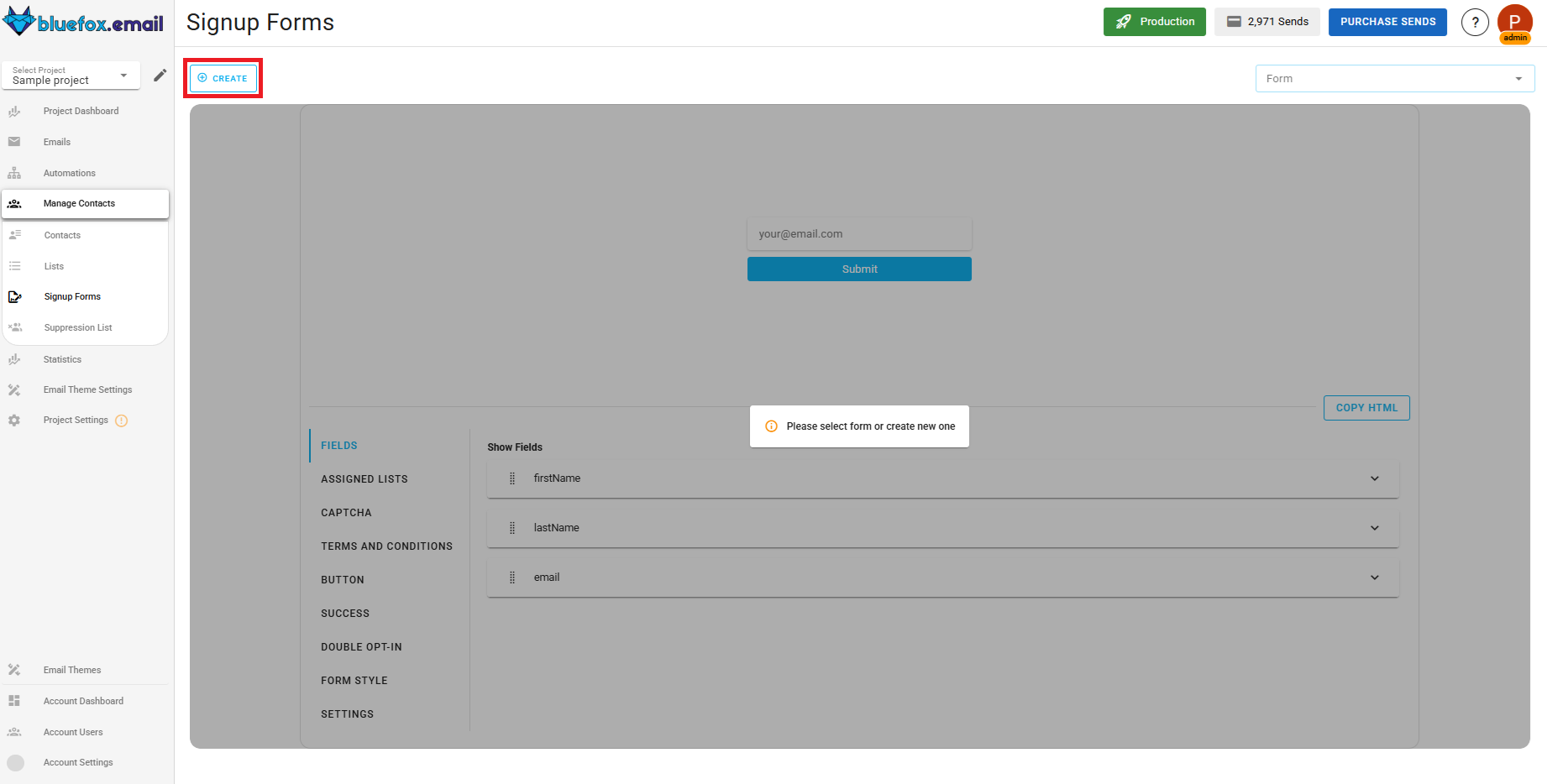
This will open the form builder where you can customize your form's fields, styles, and settings.
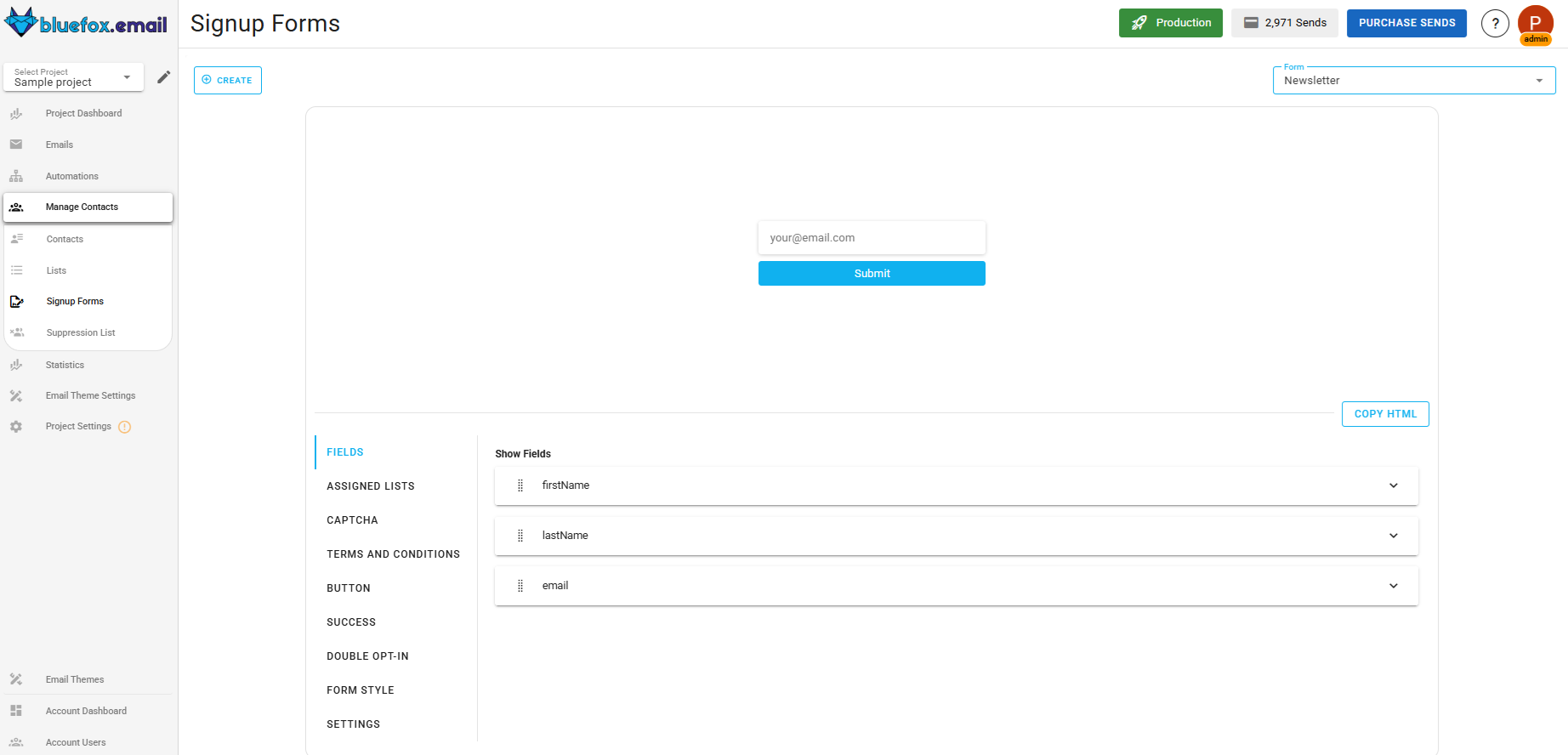
You can customize your form to match your brand:
- Include custom fields (name, phone number, company, etc.) that you have in your contact properties
- Manage form styles like form style (rows or columns), colors, fonts, and more
- Button's text, font and colour
- Customize the success message
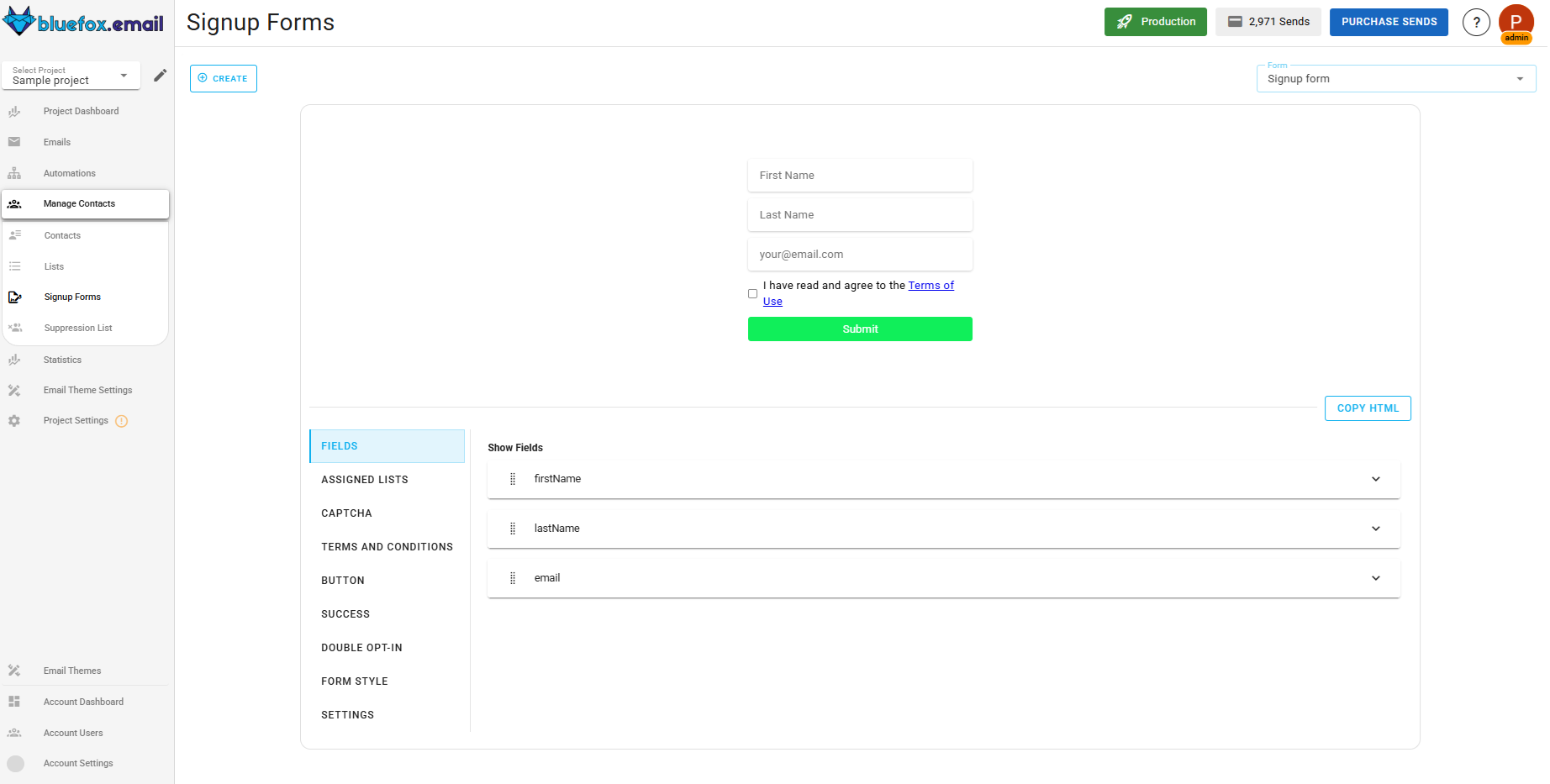
For SparksPro Cleaning, we'll create a form for their "Cleaning Tips Newsletter" that collects email addresses and first names from visitors interested in home cleaning advice.
Adding Custom Fields
If you want to collect additional information beyond email addresses, you can add custom fields to your forms. First, define these fields in Project Settings → Custom Contact Properties, then add them to your signup form.
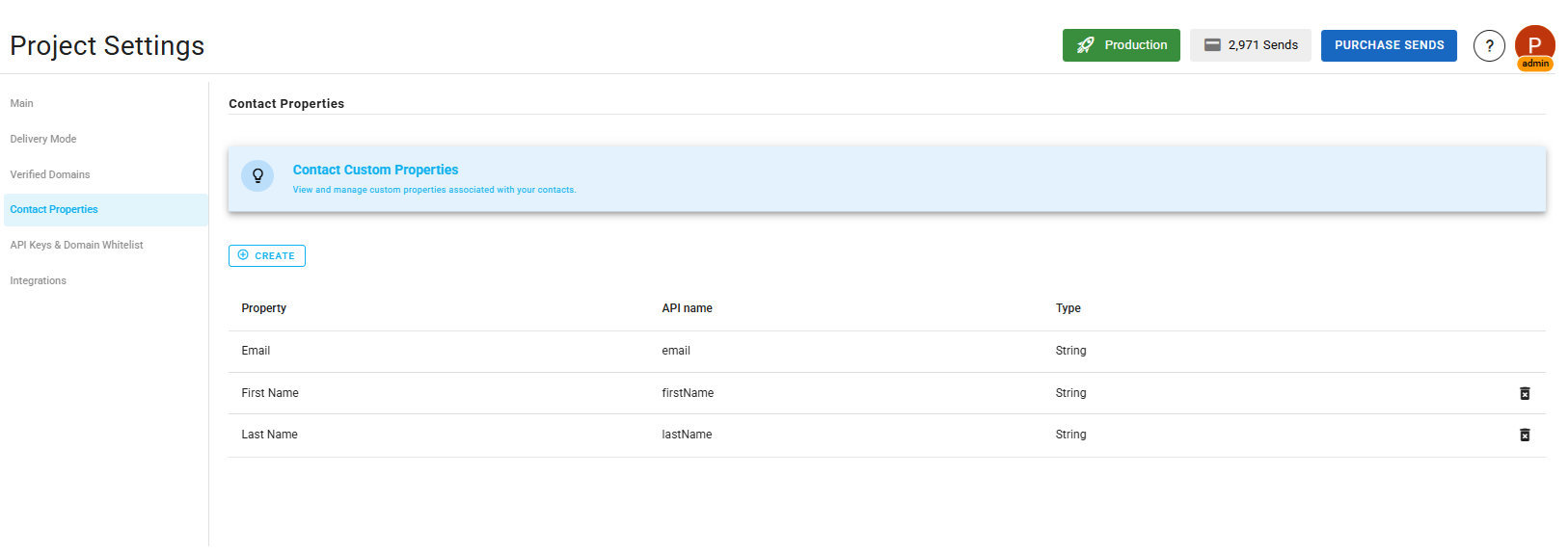
Multi-List Signup (Optional)
If you want to give subscribers more control over what they receive, BlueFox Email also supports multi-list signup forms. This allows subscribers to select which specific lists they want to join during signup, providing explicit consent for each list and typically resulting in higher engagement rates since people only get content they've specifically requested.
For example, SparksPro Cleaning could let subscribers choose between "Weekly Cleaning Tips," "Monthly Promotions," or "New Service Announcements" rather than subscribing to everything at once.
Embedding Forms on Your Website
Once your form is ready, you can embed it on your website by just copying the provided HTML code snippet and pasting it into your site's code. This allows you to collect contacts directly from your website without needing any third-party tools.
For detailed setup instructions, check out our Forms & Pages documentation.
Step 2: Setting Up Domain Whitelisting
Before your forms can accept submissions from your website, it's important to configure domain whitelisting. This security feature ensures that only authorized domains can add contacts to your project.
Configuring Domain Whitelist
Navigate to Project Settings then API Keys & Domain Whitelist. Here you can add a domain that is allowed to:
- Use embedded signup forms
- Call your public API endpoints
For SparksPro Cleaning, we'll whitelist sparksprocleaning.com so forms on website can collect contacts.
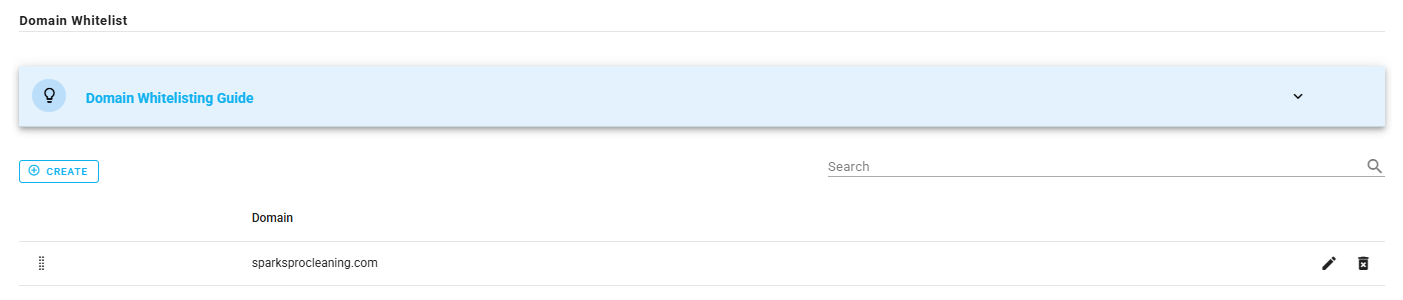
TIP
Domain whitelisting applies to embedded forms and public API usage. It's not required to create forms, but it is required for those forms to accept submissions from your website.
Step 3: Enabling Double Opt-In
Double opt-in is a confirmation-based signup flow that requires subscribers to verify their email address before being added to your list. Here's how it works:
- User submits your signup form
- They receive a confirmation email
- They click the confirmation link
- They're added to your subscriber list
Why Use Double Opt-In?
While double opt-in adds an extra step to the signup process, it provides significant benefits that strengthen your explicit consent and improve list quality.
Ensures Valid Email Addresses
Only real, working email addresses make it to your list. No typos, no fake addresses.
Confirms Intentional Signups People who complete double opt-in genuinely want to hear from you, leading to much higher engagement rates.
Reduces Bounces and Complaints
Since you're only emailing people who actively confirmed, you'll see fewer bounces and spam complaints, which directly improves your deliverability.
Strengthens Consent
Double opt-in provides the strongest possible proof that someone wants to receive your emails, which is valuable for compliance and deliverability.
To enable double opt-in, go to your form, scroll and toggle the Double Opt-In option.
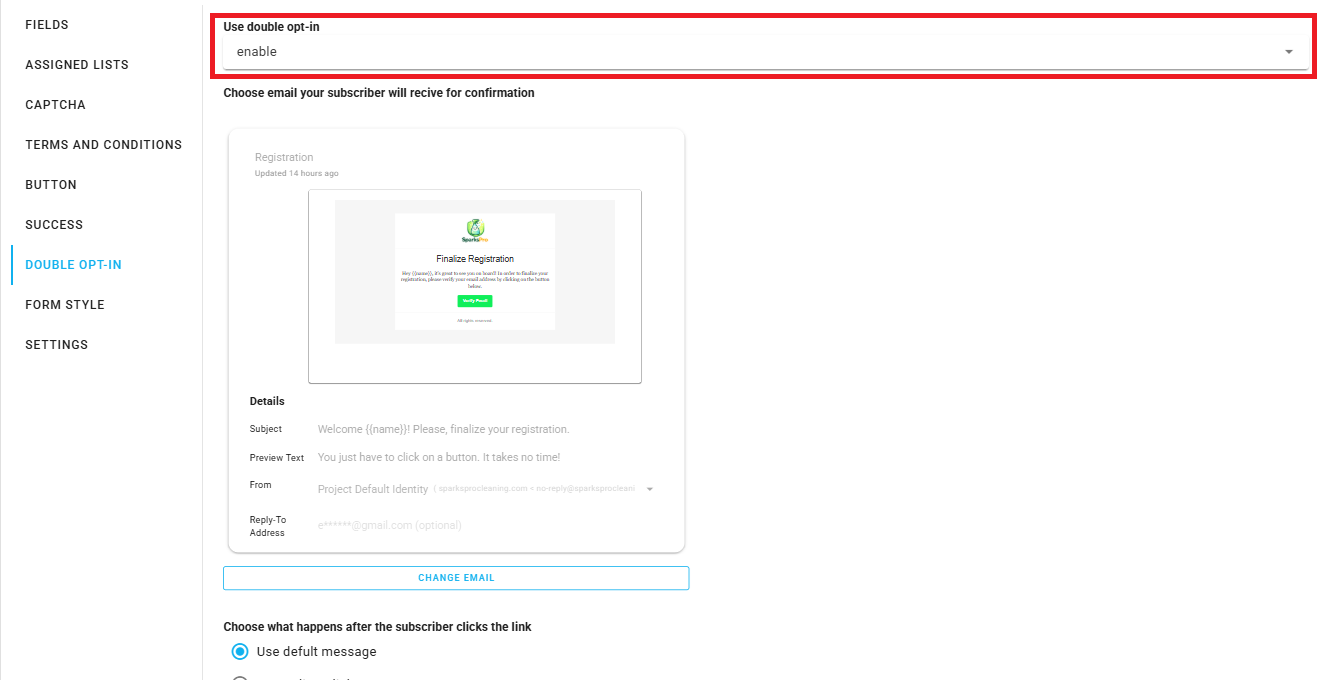
Follow the video above for walkthrough of the double opt-in setup process.
TIP
Double opt-in slightly reduces signup conversion rates but dramatically improves list quality and engagement. For most businesses, this tradeoff is absolutely worth it.
Step 4: Adding Captcha Protection
Captcha protection helps prevent bots and automated scripts from flooding your signup forms with fake or malicious email addresses.
How Captcha Protects Your Lists
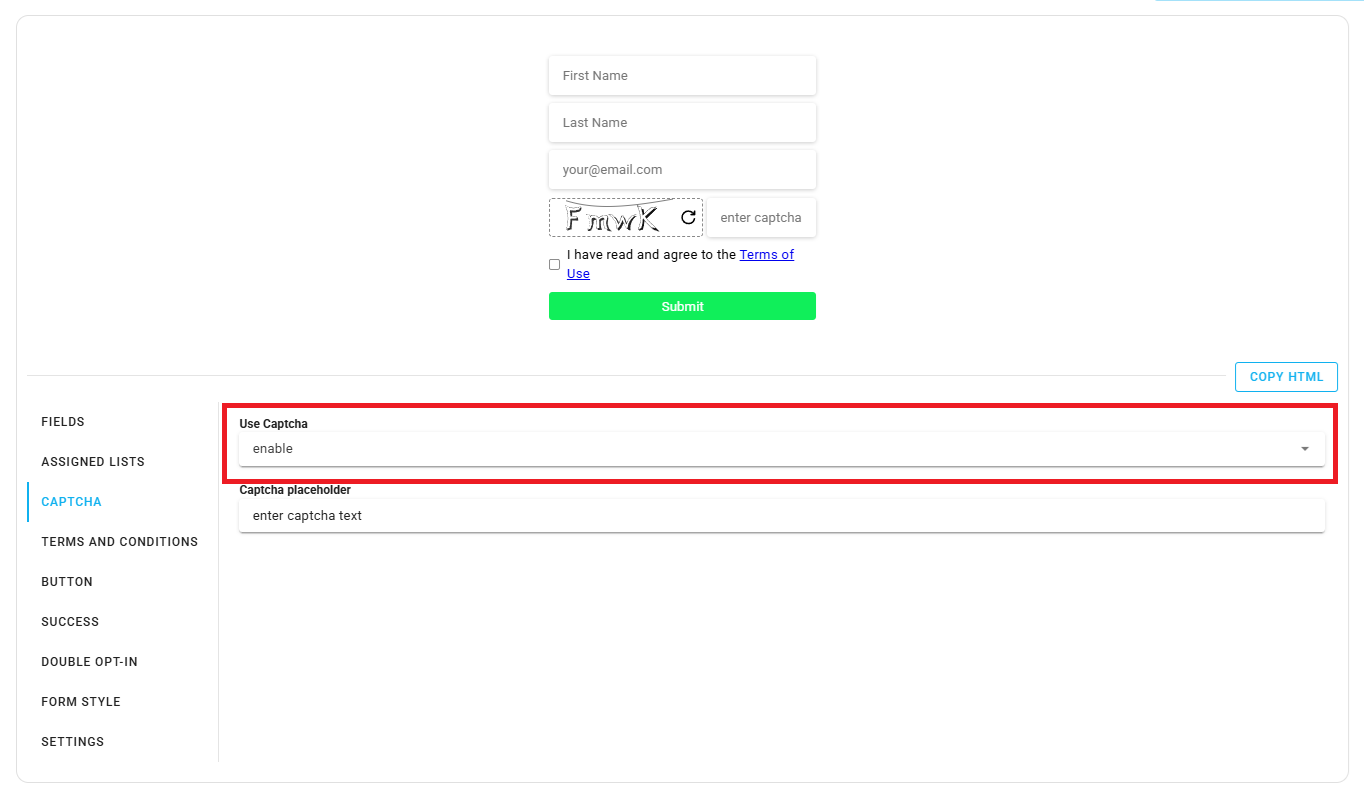
When captcha is enabled, users must complete a simple verification (entering the visible code) before submitting the form. This:
- Blocks automated bot submissions
- Prevents spam attacks
- Protects your list quality
- Maintains your sender reputation
Captcha is especially important for public-facing signup forms that are accessible to anyone on the internet. It positions captcha as complementary to double opt-in rather than adding friction.
Enabling Captcha
In your form settings, enable the Captcha Protection option in Forms & Pages, Signup Form.
Step 5: Importing Contacts via CSV
If you're migrating from another email platform or have an existing database of contacts, CSV import is the quickest way to add them to BlueFox Email.
When to Use CSV Import
CSV import is ideal for:
- Initial database setup when starting with BlueFox Email
- One-time migration from platforms like Mailchimp, SendGrid, or Brevo
- Bulk uploads from webshops, CRMs (like HubSpot), or popup providers (like OptinMonster or Optin Monk)
- Offline contact collection from events, conferences, or in-person signups
Critical: Consent is Required
Only import contacts who have already consented to receive emails from you. Importing purchased lists or contacts without permission will:
- Result in high bounce and complaint rates
- Damage your sender reputation
- Risk account suspension
- Violate email marketing regulations
CSV import is a starting step for initial setup, not an ongoing collection method.
Preparing Your CSV File
Your CSV file must include an email column, but you can also include additional fields like:
- First name
- Last name
- Company
- Phone number
- Any custom fields you've defined
Before importing, make sure you've added any custom contact properties in Project Settings then Contact Properties.
Importing Your Contacts
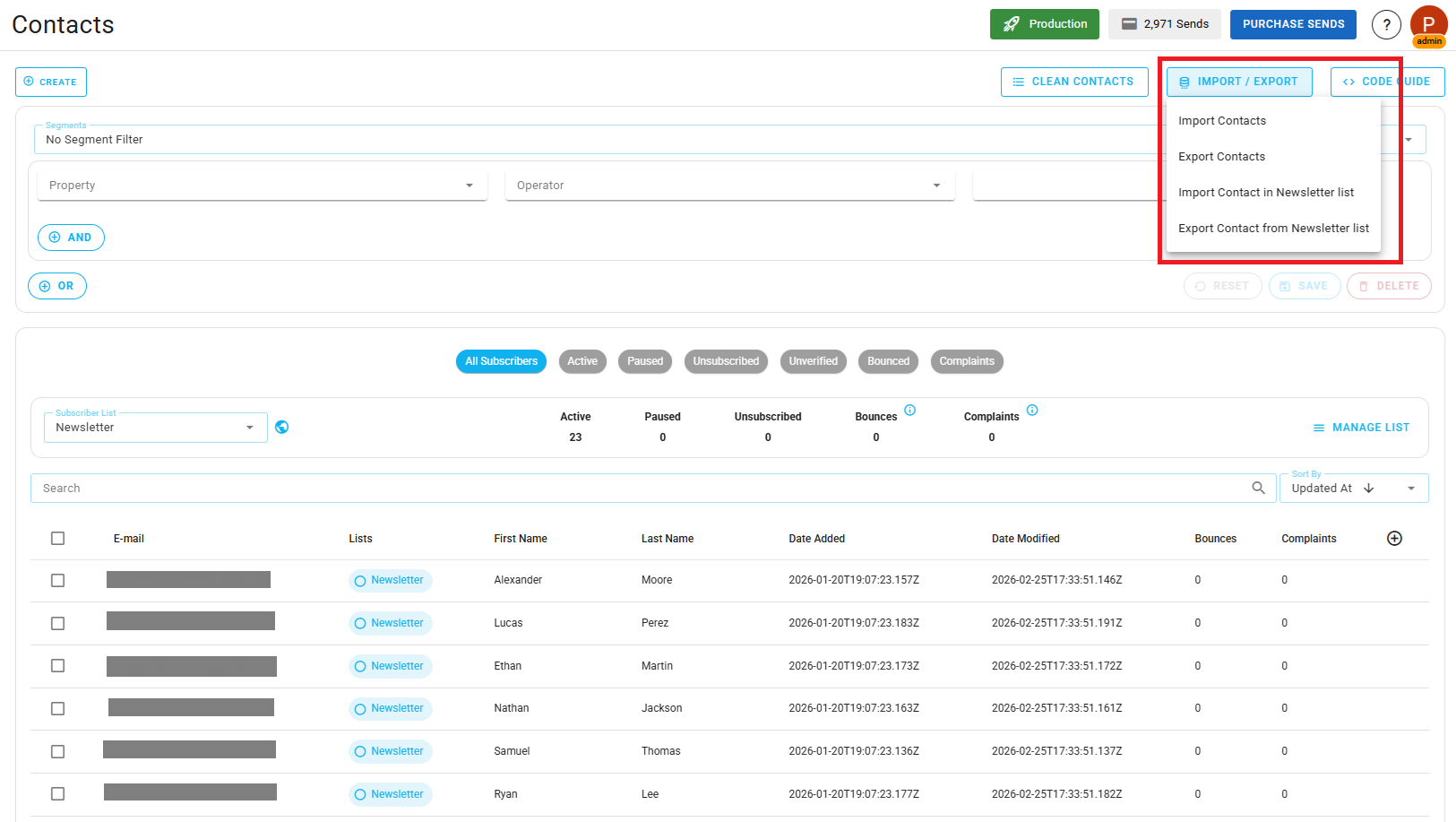
Navigate to the Contacts section and click Import Contacts.
Upload your CSV file and map the columns to your contact fields.
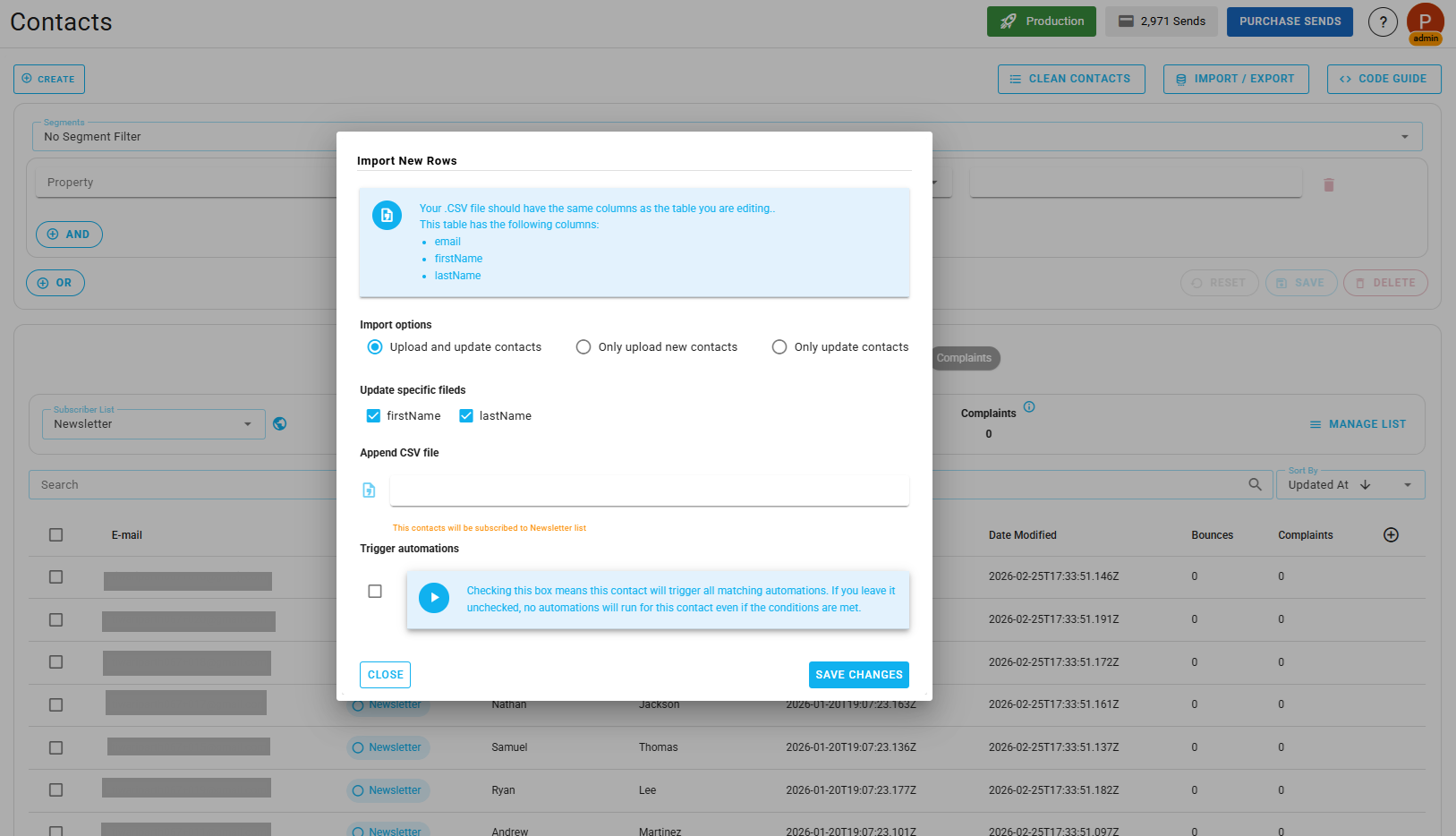
Here's what to watch for:
- Match your CSV headers to the API names shown in BlueFox Email
- Select which subscriber list(s) the contacts should be added to
- Review the preview before confirming the import
For SparksPro Cleaning, we're importing their existing customer database from a previous email platform, ensuring all contacts previously consented to marketing emails and match clear subscription intent.
Multi-Source Integrations
Many businesses collect contacts across multiple platforms. Common sources include:
- Webshops and e-commerce platforms (Shopify, WooCommerce)
- CRMs (HubSpot, Salesforce, Pipedrive)
- Popup providers (OptinMonster, OptiMonk, Sumo)
- Event platforms (Eventbrite, Meetup)
You can export contacts from these platforms and import them into BlueFox Email using a CSV file. Detailed migration guides (such as Mailchimp → BlueFox Email and other platform-specific walkthroughs) will be available in our dedicated migration catalog soon.
TIP
CSV import is great for getting started, but it's not ideal for ongoing synchronization. If you need real-time contact syncing across multiple systems, consider using the API (covered next).
Step 6: Synchronizing Contacts via API
For technical users and businesses with custom applications, BlueFox Email provides a powerful API for synchronizing contacts across multiple systems.
When to Use API Synchronization
APIs are ideal for:
- Web applications that need to automatically add users to email lists
- Multi-system environments where contact data lives in multiple places
API is for Synchronization, Not Blind Collection
The API should be used to synchronize contacts that have already provided consent, not to blindly collect or add contacts. Always ensure:
- Contacts have clear subscription intent
- Consent was obtained (either per list or via terms and conditions)
- You're syncing data, not scraping or harvesting
Explicitly refer back to the explicit consent principles covered earlier.
Common API Scenarios
Scenario 1: User Signs Up on Your Website
When a user creates an account on SparksPro Cleaning's website and opts in to marketing emails, your application calls the BlueFox Email API to add them to the appropriate subscriber list.
Scenario 2: CRM to BlueFox Email Sync
When a lead becomes a customer in your CRM, automatically add them to a "Customers" list in BlueFox Email for targeted campaigns.
Scenario 3: Custom Fields Update
When a customer updates their preferences or profile in your application, sync those changes to their BlueFox Email contact record.
Scenario 4: Handling Unsubscribes
When someone unsubscribes in BlueFox Email, use webhooks to automatically update their contact status in your CRM or application (e.g., marking them as "out of communication" or removing them from marketing lists). This keeps subscription preferences consistent across all your systems.
Getting Started with the API
To use the API, you'll need:
- An API key from Project Settings → API Keys & Domain Whitelist
- Your project ID
- Basic API knowledge (or a developer on your team)
BlueFox Email provides comprehensive API documentation for:
- Adding and updating contacts
- Managing subscriber lists
- Handling unsubscribes
- Custom field synchronization
Check out our Contacts Management API, List Management API, and Webhooks documentation for detailed technical guides. We avoid duplicating technical API documentation here, use those resources for implementation details.
Keep in mind that synchronization can go both ways, for example, when someone unsubscribes in BlueFox Email, you may want your CRM or application to be aware of that change so their preferences stay consistent across systems. You can also build custom workflows, like subscription preference pages with your own branding or custom redirect behavior after form submission. All of this is possible with the API, but its out of scope for this article, so refer to the API documentation for implementation details.
Conclusion
Building a high-quality email list is about collecting contacts the right way—with consent, transparency, and respect. As you grow your list in BlueFox Email, keep these principles in mind:
- Quality over quantity – Engaged subscribers beat large lists every time
- Explicit consent is required – Every contact should have opted in to receive your emails
- Be transparent – Tell subscribers what they're signing up for and how often you'll email
- Layer your protection – Use double opt-in, captcha, and domain whitelisting for public forms
- Honor unsubscribes immediately – It's the law and protects your sender reputation
BlueFox Email gives you the tools to collect contacts responsibly while protecting your deliverability and sender reputation. Ready to start building your list? Head over to your BlueFox Email dashboard and create your first signup form today!
 Parth Tiwari · Updated May 28, 2026