
Appearance
BlueFox Email vs ActiveCampaign
On November 3, 2025, ActiveCampaign changed what counts as a billable contact. Accounts created before that date still pay only for active subscribers. Accounts created on or after it are billed for every contact stored, including unsubscribed, bounced, and unconfirmed ones, the people you can no longer legally or technically email. It's a quiet change, documented in ActiveCampaign's help center, and it lands on top of a June 2024 plan restructure that many users first noticed as a price increase when existing accounts were migrated from August 2024. Two different customers on two different rulebooks, depending on signup date.
That single change is a useful lens for the rest of this comparison, because it's the clearest example of what it means to buy an all-in-one marketing automation platform priced by list size: the price tracks who you've ever collected, not who you're actually reaching. ActiveCampaign is a genuinely powerful platform built on that model: deep automation with 950+ ready-made recipes, CRM features with optional sales pipeline add-ons, an AI layer it has been expanding quickly, and 1,000+ integrations. BlueFox Email is a narrower bet: one product, email only, marketing and transactional together, priced by what you send, with contacts never billed at all regardless of status.
Those are different tools solving overlapping problems from different directions. Here's how they actually compare. Numbers reflect public pricing and documentation as of October 2026.
The short version
ActiveCampaign earns its reputation. Independent reviewers consistently call its automation builder one of the deepest in the category, and its CRM features mean sales and marketing can run off the same contact record instead of syncing two systems. If you want one platform for lifecycle marketing, sales pipelines, and an AI layer that's improving fast, it's a legitimate pick.
The trade-offs are real too. There's no free plan, only a 14-day free trial (no credit card needed). The entry-level Starter plan caps every automation at five actions and doesn't include If/Else branching, so the thing ActiveCampaign is famous for isn't actually available until you're on Plus. Transactional email isn't included in any plan; it's a paid add-on that runs on Postmark, which ActiveCampaign acquired in 2022, priced on Postmark's own plans. And the learning curve is one of the most frequently cited complaints in reviews.
BlueFox Email skips the CRM and most of the integration marketplace entirely; it doesn't compete there. It doesn't have ActiveCampaign's AI content and agent features either, though it does offer an open-source MCP server so AI agents can work with your BlueFox data, more on that below. What it offers instead is unrestricted automation on every plan including free, transactional and marketing mail from the same plan or pack, and a bill that never grows because your list did, only because you sent more.
Two pricing models, and a billing change worth knowing about
ActiveCampaign prices by contacts, across four plans: Starter, Plus, Pro, and Enterprise. There's no permanent free plan, just a 14-day free trial with no credit card needed. Prices below are ActiveCampaign's published rates per month when billed annually; paying month to month costs more.
ActiveCampaign (priced per contact)
| Contacts | Starter | Plus | Pro | Enterprise |
|---|---|---|---|---|
| 1,000 | $15/mo | $49/mo | $79/mo | $145/mo |
| 2,500 | $39/mo | $95/mo | $149/mo | $255/mo |
| 5,000 | $79/mo | $145/mo | $205/mo | $375/mo |
| 10,000 | $149/mo | $189/mo | $375/mo | $589/mo |
| 25,000 | $391/mo | $389/mo | $629/mo | $879/mo |
| 50,000 | Not available | $609/mo | $969/mo | $1,169/mo |
| Above 50,000 | Talk to sales | Talk to sales | Talk to sales | Talk to sales |
Starter is only available up to 25,000 contacts, and at that size it actually costs more than Plus.
| Plan | Email sends | Users | Automation | Segmentation | Also includes |
|---|---|---|---|---|---|
| Starter | 10× contact limit | 1 | 5 actions per automation, no If/Else | Limited | Limited AI access, 1 AI brand kit, email-only A/B testing |
| Plus | 10× contact limit | 1 | Unlimited actions | Standard | Landing pages, limited AI access, email-only A/B testing |
| Pro | 12× contact limit | 3 | Unlimited actions | Advanced | Unlimited AI access, A/B testing in automations, predictive and conditional content, attribution and conversion tracking, priority support |
| Enterprise | 15× contact limit | 5 | Unlimited actions | Premium | Everything in Pro, plus custom objects, SSO, premium CRM integrations, a dedicated account team |
Two structural things to know going in. First, transactional email isn't included in any plan. It's listed as a paid add-on on every tier and runs on Postmark, which ActiveCampaign acquired in 2022 and which follows Postmark's own volume-based pricing: Basic is $15/month for 10,000 emails plus $1.80 per 1,000 after that, Pro is $16.50/month for 10,000 plus $1.30 per 1,000, and Platform is $18/month for 10,000 plus $1.20 per 1,000 (Postmark's free tier covers just 100 emails a month for testing). If your app sends password resets or receipts, that's a second bill on top of whichever ActiveCampaign tier you're on. Second, automation's headline feature is gated. Starter's five-action cap and lack of If/Else branching mean the deep, branching automation ActiveCampaign is known for only exists from Plus upward, so the $15-a-month entry price doesn't buy the thing that made you consider ActiveCampaign in the first place. Lead scoring and deal pipelines, meanwhile, come with the paid Pipelines CRM add-on, available from Plus.
Then there's the November 2025 change described above: accounts created on or after November 3, 2025 are billed for every stored contact, unsubscribed and bounced included, while older accounts still pay only for active ones. If you're comparing a quote against something you read from before late 2025, it may already be out of date.
BlueFox Email (priced per send)
BlueFox Email charges per send, never per contact. One send is one email delivered to one recipient, and transactional, triggered, and campaign emails all cost the same. Contacts of any status are unlimited and free, every plan and pack includes every feature, and sends are bought at the workspace level and shared across all projects. All prices below exclude VAT, which is applied at checkout based on your local rate.
There are two ways to pay (a recurring monthly plan or one-time send packs) and two ways to send: Standard, where BlueFox Email manages the sending infrastructure, or BYO AWS SES, which gives 2× the sends at the same price while you pay AWS directly for sending. New workspaces get a one-time allowance of 3,000 free sends on Standard pricing or 6,000 on BYO SES pricing, valid for 12 months, with no credit card required.
Monthly plans (excl. VAT)
Best for regular, steady sending.
| Plan | Price / month | Standard sends / month | BYO AWS SES sends / month |
|---|---|---|---|
| Starter | $6 | 5,000 | 10,000 |
| Basic | $9 | 10,000 | 20,000 |
| Growth | $19 | 25,000 | 50,000 |
| Pro | $35 | 50,000 | 100,000 |
| Business | $59 | 100,000 | 200,000 |
| Scale | $129 | 250,000 | 500,000 |
| Elite | $239 | 500,000 | 1,000,000 |
Each billing cycle brings a fresh sending allowance, and unused sends do not roll over. You can cancel anytime and keep using your allowance until the current billing period ends, or upgrade anytime by paying the price difference, with the new plan starting right away.
One-time send packs (excl. VAT)
Best for occasional or unpredictable volume, or for teams that prefer to pay upfront.
| Pack | Price | Standard | BYO AWS SES |
|---|---|---|---|
| Essential | $50 | 50,000 sends ($1.00 per 1,000) | 100,000 sends ($0.50 per 1,000) + AWS fees |
| Premium | $300 | 500,000 sends ($0.60 per 1,000) | 1,000,000 sends ($0.30 per 1,000) + AWS fees |
Pack sends are valid for 12 months from the date of purchase, and you're never billed again unless you buy another pack. Packs stack with no cap, and the oldest sends are always used first, so the newest last the longest.
AWS fees (BYO SES only)
In BYO mode, AWS bills you directly for sending, separately from your BlueFox Email plan or pack. At AWS's à la carte rate of $0.10 per 1,000 emails, 100,000 sends add about $10, and every BYO figure in this comparison uses that rate.
If your AWS account is new, check which SES pricing option it's on. Since July 21, 2026, new SES accounts (and account/region combinations with no metered SES activity since June 1, 2025) start on the SES Essentials plan at $0.16 per 1,000 emails for the first 10M per month. You can switch to à la carte pricing at any time.
Dedicated IP
Teams on managed sending can add a dedicated sending IP for $50/month (excl. VAT), at any volume. The IP is reserved for your workspace, so your sender reputation depends only on your own sending. To set one up, email hello@bluefox.email. On BYO AWS SES there's nothing to buy from BlueFox Email: dedicated IPs are set up and billed in your own AWS account.
Custom volume
If you need more than the published plans and packs cover, contact sales at hello@bluefox.email. The team sets up a discovery call to plan your volume and onboarding.
How to read the scenarios
Each scenario below states its own contact count and send volume instead of assuming a typical sending frequency. ActiveCampaign prices are its published annual-billing rates (the lower of its two prices), picking the cheapest plan that includes what each scenario needs. Transactional volume is priced on Postmark's cheapest tier for that volume. All BlueFox Email prices exclude VAT, and BYO SES figures include AWS fees at $0.10 per 1,000 emails.
Scenarios: monthly plans
Monthly plans suit regular, steady sending, so these scenarios compare ActiveCampaign's monthly price with the BlueFox Email plan that fits each month's volume.
Transactional-only SaaS (5,000 users × 8 emails each = 40,000 sends/month, no marketing):
- Buying ActiveCampaign for this alone doesn't make sense; you'd use Postmark directly. Postmark Platform, the cheapest tier at this volume: $18 plus 30,000 emails of overage at $1.20 per 1,000 = $54/month.
- BlueFox Email Standard: Pro at $35/month (50,000 sends).
- BYO SES: Growth at $19/month (50,000 sends) plus ~$4 AWS = ~$23/month.
SaaS with marketing and transactional (5,000 contacts with a weekly newsletter, about 20,000 sends/month, plus the same 40,000 transactional sends = 60,000 sends/month):
- ActiveCampaign Plus at 5,000 contacts ($145/month, the cheapest plan with If/Else branching) plus the Postmark-based transactional add-on for 40,000 emails ($54/month) = about $199/month across two products.
- BlueFox Email Standard: Business at $59/month (100,000 sends).
- BYO SES: Pro at $35/month (100,000 sends) plus ~$6 AWS = ~$41/month.
Newsletter with automation (10,000 contacts × 4 sends/month = 40,000 sends/month):
- ActiveCampaign Plus at 10,000 contacts: $189/month. Starter ($149) covers the volume but caps each automation at five actions with no branching.
- BlueFox Email Standard: Pro at $35/month (50,000 sends).
- BYO SES: Growth at $19/month (50,000 sends) plus ~$4 AWS = ~$23/month.
Large list, monthly broadcast (50,000 contacts × 1 send/month = 50,000 sends/month):
- ActiveCampaign Plus at 50,000 contacts: $609/month (Starter isn't offered above 25,000 contacts).
- BlueFox Email Standard: Pro at $35/month (50,000 sends).
- BYO SES: Growth at $19/month (50,000 sends) plus ~$5 AWS = ~$24/month.
Scenarios: one-time packs
Packs suit occasional or unpredictable sending. BlueFox Email pack sends stay valid for 12 months, so each scenario below looks at a full year. ActiveCampaign bills every month for the contacts you store, whether you send that month or not, and new accounts pay for unsubscribed and bounced contacts too.
Occasional campaigns (10,000 contacts × 4 sends a year, such as a quarterly newsletter or event announcements = 40,000 sends/year):
- ActiveCampaign Starter at 10,000 contacts kept all year: $149 × 12 = $1,788/year.
- BlueFox Email Standard: one Essential pack ($50) covers the whole year, with 10,000 sends to spare.
- BYO SES: one Essential pack ($50, 100,000 sends) plus ~$4 AWS = ~$54/year.
A big list, every few months (50,000 contacts × 1 send every 3 months, such as a quarterly announcement or a seasonal sale = 200,000 sends/year):
- ActiveCampaign Plus at 50,000 contacts kept all year: $609 × 12 = $7,308/year.
- BlueFox Email Standard: four Essential packs ($200) cover exactly 200,000 sends, bought before each send if you prefer.
- BYO SES: two Essential packs ($100, 200,000 sends) plus ~$20 AWS = ~$120/year.
Cost summary: For transactional-only sending, BlueFox Email costs roughly 35% to 57% less than going straight to Postmark. Once marketing automation is involved, the gap widens to roughly 70% to 96% in the monthly scenarios above, because ActiveCampaign charges for every contact on the list and puts branching behind Plus, while BlueFox Email charges only for sends. For occasional senders, a BlueFox Email pack comes in about 97% to 98% lower than keeping an ActiveCampaign plan running all year. ActiveCampaign's advantage shows up when you're sending frequently to a smaller, highly automated list and want the CRM and AI layer bundled into the same price; that's a real use case, just not the shape most large or transactional-heavy senders are in.
Designing the emails
ActiveCampaign ships a drag-and-drop designer for plain-text and HTML emails with 250+ pre-built templates. Some reviewers describe the library as comprehensive but visually dated next to newer builders from Mailchimp or Klaviyo. ActiveCampaign does offer AI brand kits (one on Starter, five on higher plans) for applying brand colors, fonts, and logos to AI-generated content, plus inbox preview testing on Plus and above.
BlueFox Email's builder, powered by the Chamaileon SDK, is built around reusable structure: reusable blocks (headers, footers, CTA rows) and project-level brand variables (colors, fonts, logos) that you set once and reuse everywhere, so templates stay consistent by construction rather than by whoever built the last email. It includes a built-in stock photo gallery, a photo editor, dark mode preview, and VML fallbacks that keep background images working in Outlook. Personalization runs on Handlebars with loop and conditional elements, on every plan, not gated by tier.

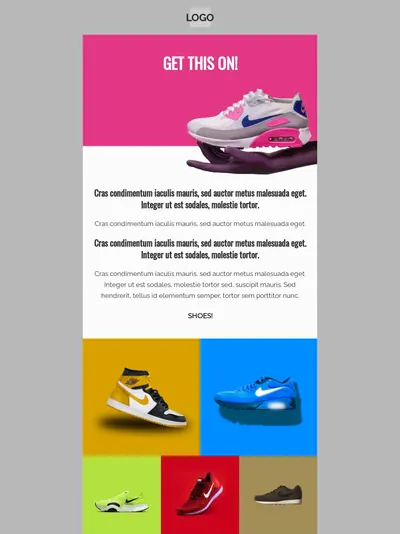
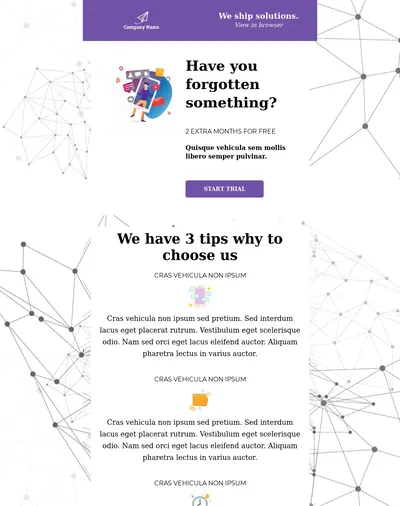
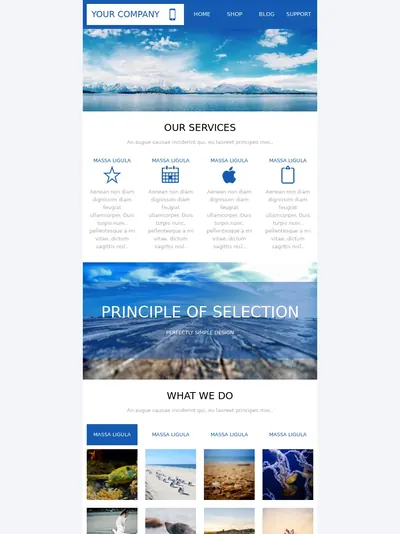

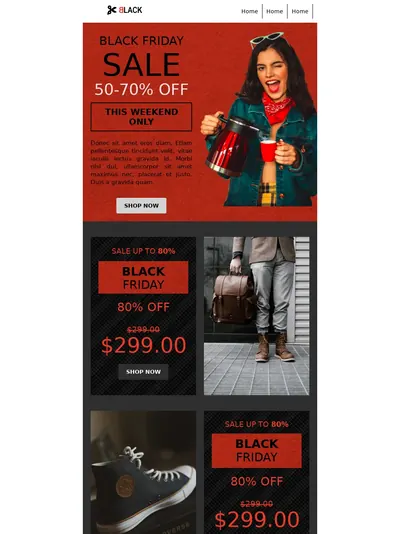

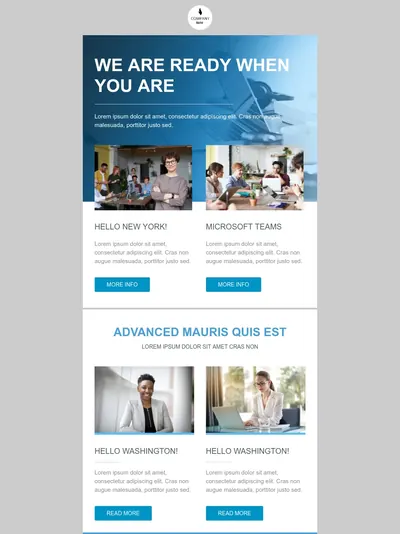

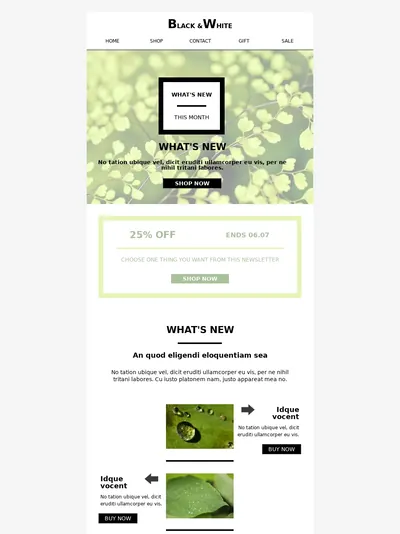
Template 1 of 10: Marketing Agency Newsletter
If a large, ready-made template catalog matters more than block-level reuse, ActiveCampaign's library is bigger. If you want the design system to enforce consistency rather than rely on discipline, BlueFox's block-and-variable model does that job more directly.
Automation: genuinely deep, genuinely gated
This is ActiveCampaign's strongest ground, and it's worth conceding plainly. Independent reviews are consistent that its automation depth is among the best in the category: a visual builder with If/Else branching, multiple triggers, goals, 950+ ready-made automation recipes, an AI-powered automation builder, site and link tracking, and CRM integration so a sales action can fire off a marketing sequence and vice versa. It's the reason a lot of people choose the platform in the first place.
The catch is where that power actually lives. Starter caps every automation at five actions and doesn't include If/Else branching. The deep automation ActiveCampaign is known for only unlocks on Plus and above, A/B testing inside automations starts at Pro, and lead scoring comes with the paid Pipelines add-on. A $15-a-month Starter subscriber is using a meaningfully different, much shallower product than what's being reviewed.
BlueFox Email's automation builder ships in full on every plan, including free. Triggers include Contact Added, Contact Updated (with from/to property conditions), Enter Segment, Leave Segment, and Time Based (recurring schedules against a whole list). Node types cover Send Email, Notify, Timer, Audience Filter (property, segment, or email activity), Branching with Condition sub-nodes, Set Value, Manage Tags, Webhook, and a defined Complete exit, plus Exit Criteria to leave a flow early. Running automations can be edited in place, with the choice to apply changes to upcoming-only or upcoming-and-in-progress contacts, without disabling or duplicating the flow.
Honest comparison: ActiveCampaign's ceiling is higher once you're on Plus or Pro; split testing inside flows, lead scoring, and site-tracking triggers aren't things BlueFox does. BlueFox's floor is higher: the full node set and live-editing are there from the free tier, with nothing held back for a higher bill.
CRM, AI, and the rest of the suite
This is where ActiveCampaign is plainly a bigger product, and it's fair to say so without hedging. Every plan includes contact profiles, custom fields, tags, and CRM integrations, and the Pipelines and Sales Engagement add-ons (from Plus) bring deal and account records, pipeline management, lead scoring, automated 1:1 email, and win probability, tied to the same contact record marketing uses. On the AI side, Active Intelligence (unlimited on Pro and Enterprise, limited on Starter and Plus) covers an AI campaign builder, an AI-powered automation builder, AI content and image generation, and AI-suggested segments, and Pro adds predictive sending. ActiveCampaign has made Active Intelligence available to all customers, with new agents and a remote MCP server, and on November 18, 2025 it launched a connector for Anthropic's Claude, built on that MCP server, letting users analyze campaign data, create campaigns, update the CRM, or trigger automations from Claude. Its pricing page also lists Claude and ChatGPT access via MCP.
BlueFox Email doesn't compete on most of this. No CRM, no landing page builder, and no dedicated site-tracking feature, though the same job is doable today by updating contact properties from your own app and segmenting on them. There's no AI content-generation or agent layer. What BlueFox does have is an open-source, local MCP server that lets AI agents such as Claude, Cursor, or Windsurf manage a project, its campaigns, contacts, and lists directly. Its integration surface is narrower by design: an API for contacts, subscriptions, transactional and triggered sends, webhooks covering the full event set on every plan, a Supabase auth-email path, a Zapier connector with six triggers and eight actions, and in BYO-SES mode, direct AWS access for anything SES-level.

If the goal is one platform for marketing, sales, and an expanding AI layer, ActiveCampaign is doing real, well-reviewed work there today that BlueFox doesn't attempt. If the goal is specifically email, done well, without paying for a CRM you won't use, that gap works in BlueFox's favor instead.
Deliverability and infrastructure
ActiveCampaign gives senders a solid deliverability toolkit: domain authentication (DKIM, DMARC, and SPF through a sending domain), automatic suppression of contacts after a hard bounce or three consecutive soft bounces, a spam check before you send, and a deliverability team that advises customers. Independent inbox-placement tests vary widely by methodology, so we don't lean on any single figure here.
The catch is dedicated IPs. ActiveCampaign requires at least 100,000 active, opted-in, engaged contacts that you email regularly before it will provide one, and each dedicated IP costs $750, per its help center. Below that contact threshold, you're on shared infrastructure with no path to a dedicated IP no matter how much you're willing to pay. And since transactional sending runs on Postmark's separate infrastructure, your marketing and transactional reputations are split across two systems whether you intended that or not.
BlueFox Email starts every project in a sandbox with no AWS account required, moves to production sending at your approved monthly volume after a review, and offers an optional bring-your-own-SES mode where reputation is fully isolated in your own AWS account. A dedicated IP is a $50/month (excl. VAT) add-on for managed sending, at any volume, requested by email, with no contact minimum; in BYO-SES mode, you set one up directly through your own AWS SES account instead, so it's never a separate BlueFox charge there. The dashboard shows live bounce rate against a 2.5% ceiling and complaint rate against a 0.05% ceiling, so the thresholds are visible before you cross them. Marketing and transactional mail share the same infrastructure and the same reputation, by design, rather than being split across an acquired product.
If you're already past 100,000 engaged contacts and want ActiveCampaign's specific toolkit, its deliverability story is a real strength. Below that line, or if you want a dedicated IP without a volume gate, BlueFox's is the more accessible option.
Segmentation
ActiveCampaign's segmentation scales with plan: Limited on Starter, Standard on Plus, Advanced on Pro, Premium on Enterprise, built from contact fields, tags, engagement history, and site-tracking data where connected, with AI-suggested segments as part of Active Intelligence. It's a capable system once you're past the entry tier.
BlueFox Email's segments use AND/OR condition logic with ten operators (equals, contains, is empty, greater/less than, and so on) against any contact property or tag, plus engagement conditions (opened, clicked, received, and their negatives) over a configurable day window, with no plan-based limit, including on free. Segments can scope to a single list or the whole project and drive both campaigns and automation triggers.
0of 1,240 contacts matched
You chooseWho should hear this?
- Active in last 30 days
- Plan: Pro
- Project created

We deliver toOnly the right people


Stop blasting everyone. Filter by behavior, plan, activity, or any property you've collected. Higher engagement, less waste, more revenue per send.
The difference isn't capability so much as access: ActiveCampaign's better segmentation tools live on its higher tiers; BlueFox's segmentation is the same, full-featured tool regardless of what you're paying.
Analytics and reporting
ActiveCampaign's reporting covers campaign-level opens, clicks, and bounces, plus attribution and conversion tracking on Pro and Enterprise, CRM pipeline data with the Pipelines add-on, and a custom reporting add-on available from Plus.
BlueFox Email scopes analytics at account, project, campaign, transactional email, triggered email, and subscriber-list level: sends, opens and unique opens, clicks and unique clicks, bounces, complaints, unsubscribes, resubscriptions, and paused subscriptions, with contact-level data exportable as CSV. The project dashboard shows live bounce rate against the 2.5% ceiling and complaint rate against the 0.05% ceiling, automation cards break down per-node performance, and webhooks push every event in real time. The full event set is on every plan.
Analytics
Analytics that show what happened
Delivery, opens, clicks, bounces, and subscription trends. Switch between hourly, daily, weekly, and monthly views.
Sent6,200
Failed0
Opens4,805
Unique Opens3,210
Clicks748
Unique Clicks182
Bounced8
Complaints0
ActiveCampaign's reporting goes further into revenue attribution and sales-pipeline data, tied to its CRM. BlueFox's is narrower but consistent and unrestricted by plan: sends-and-engagement reporting rather than a full attribution suite.
Support, and the learning curve
ActiveCampaign's support channels are email and chat, basic on Starter and Plus and priority on Pro and Enterprise, with onboarding and migration support on every plan (priority from Pro) and a dedicated account team on Enterprise. Reviews are generally positive, but the learning curve is one of the most frequently cited complaints, especially for complex automations. The consistent read across reviewers is that it's powerful but not beginner-friendly, and new users should budget time to get comfortable with it.
BlueFox Email is a founder-led company with a growing team. Support is email on every plan, with the option to book a call directly with the people building the product. Founder Gyula Németh has worked in HTML email since 2013 and previously built edmdesigner.com, chamaileon.io, and emailhero.io. The honest trade-off: no phone line, no 24/7 desk, and a knowledge base and community far smaller than a platform with ActiveCampaign's years of reviews and large user base has built up. What BlueFox trades for that smaller footprint is a flatter surface: there's less product to learn in the first place, since there's no CRM, no AI content layer, and no multi-channel suite sitting alongside the email tools.
So, which one
ActiveCampaign is built for teams that want marketing automation, CRM, and an expanding AI layer under one subscription, and are willing to invest the time to learn a genuinely deep product. Its automation is a well-earned reputation. The costs to go in aware of: no free plan, a five-action automation cap and no branching on the entry tier, transactional email as a separate Postmark-based add-on, a dedicated IP gated behind 100,000 engaged contacts, and, for accounts created since November 2025, billing that counts every stored contact rather than just the ones you can actually reach.
BlueFox Email is built for teams that want unrestricted email, marketing and transactional together, priced by what they send rather than who they've ever collected, with automation and segmentation fully unlocked on every plan including free. It doesn't compete on CRM or breadth; that's a deliberate scope decision, not an oversight.
If your business runs sales through the same platform as its marketing and you're comfortable investing the ramp-up time a genuinely powerful tool asks for, ActiveCampaign is a mature, well-reviewed choice; just go in knowing which plan actually includes the automation depth you're buying it for. If your list is large relative to how often you mail it, if any part of your sending is transactional, or if you'd rather not find out what your bill looks like the day your billing model quietly changes, BlueFox Email is built around avoiding exactly that.
Figure out whether you're buying a marketing-and-sales suite or a focused email platform, and the rest of the decision follows from that.
Still deciding? See how BlueFox Email compares to Mailchimp, Brevo, and Constant Contact.
Pay for the emails you send, not the contacts you've ever collected
No per-contact billing, no separate subscription for transactional mail, and full automation on every plan including free. Start free with 3,000 sends, or bring your own AWS account when you're ready to scale.