
Appearance
Segments
Segments allow you to create targeted groups of contacts based on specific conditions and criteria. Instead of sending emails to your entire list, segments help you deliver more relevant and personalized content by filtering contacts based on their properties, behaviors, or characteristics. This precision targeting leads to better engagement rates and more effective email campaigns.
With bluefox.email's segment feature, you can build complex filtering logic using AND/OR conditions, apply segments to any subscription list or all contacts, and seamlessly integrate them into your campaigns and automations for highly targeted messaging.
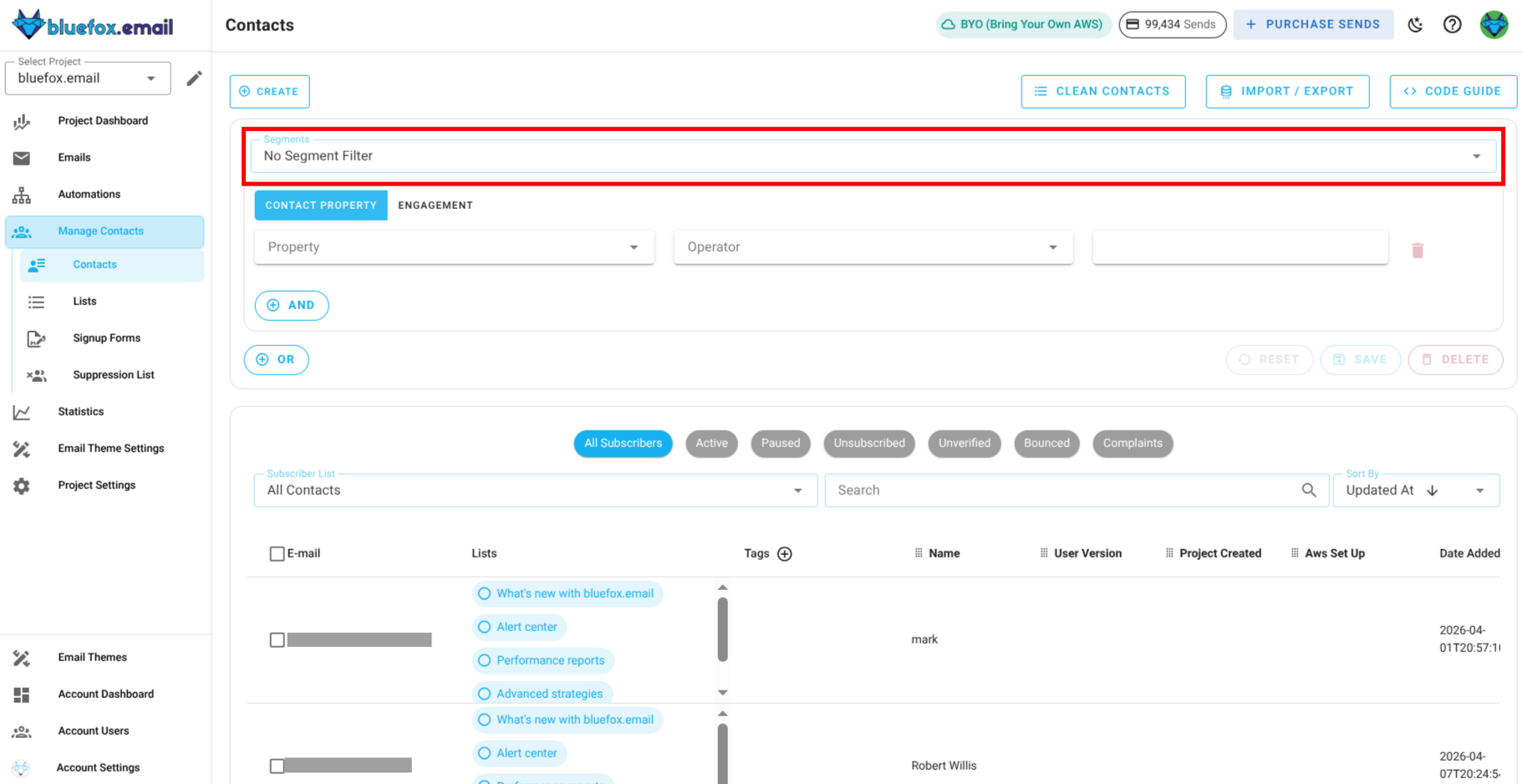
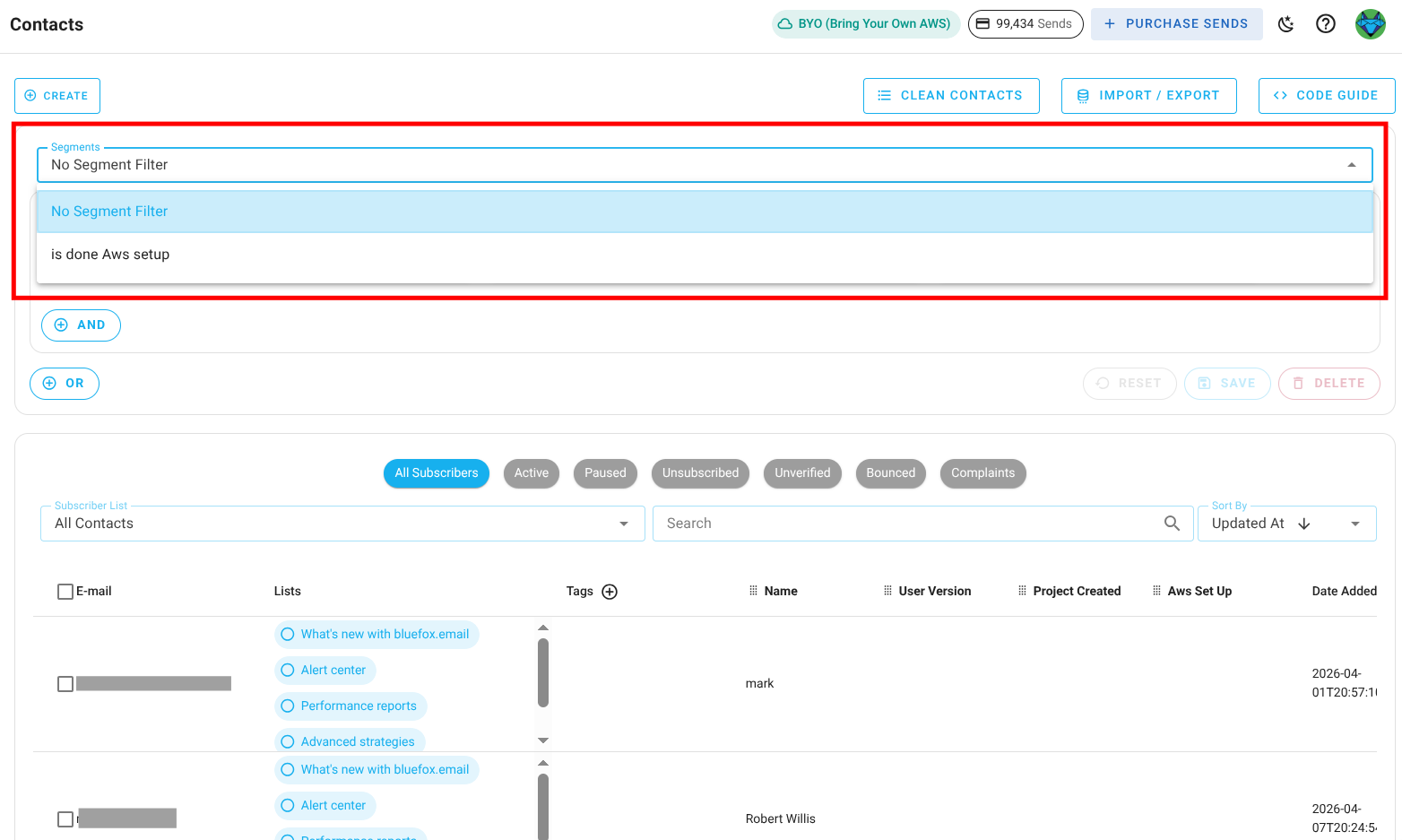
You can find your project's segments under the Segments drop-down menu in Contacts section:
Creating a Segment
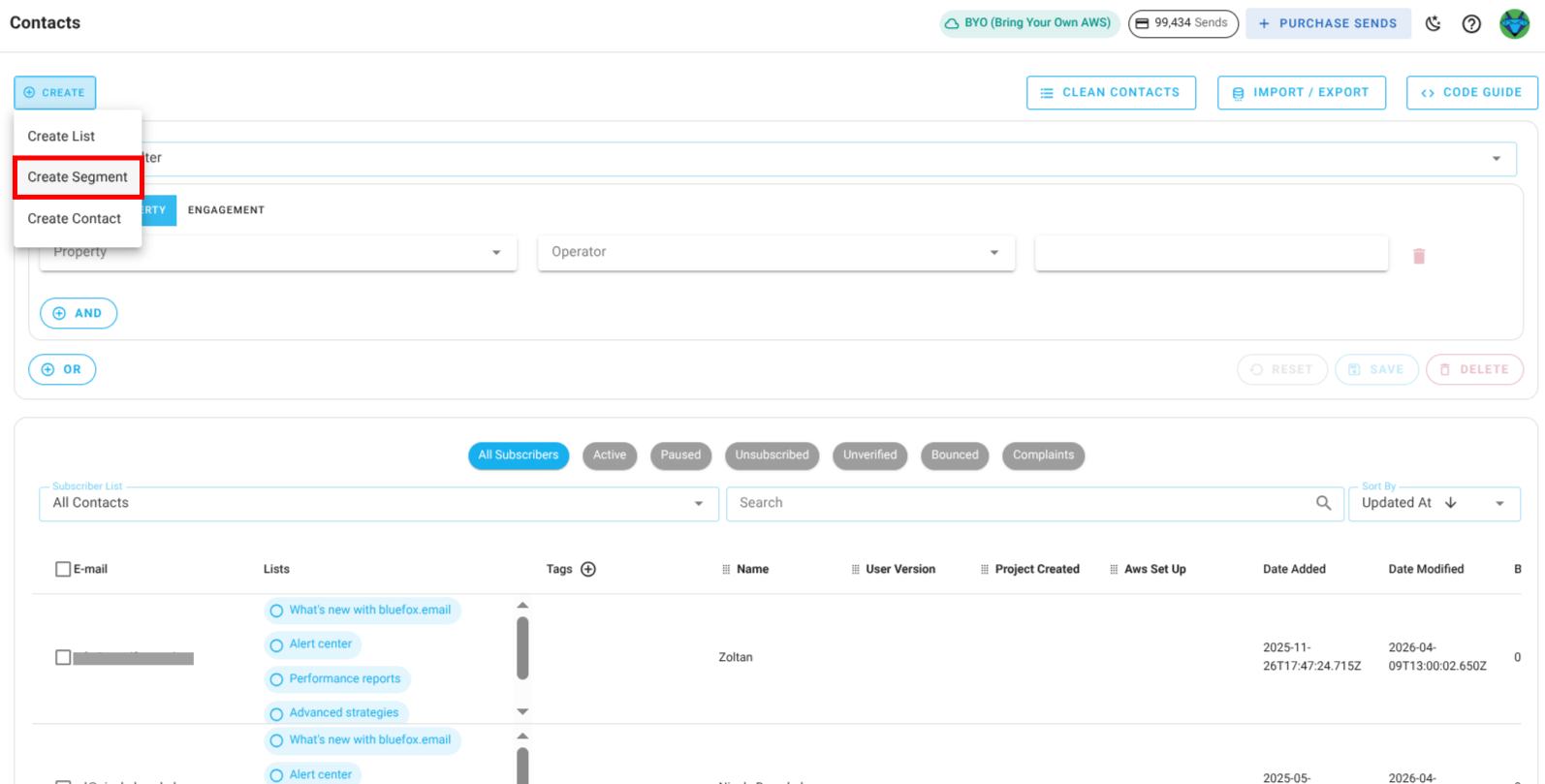
To create a new segment, click the Create button and then Create Segment in the drop-down menu.
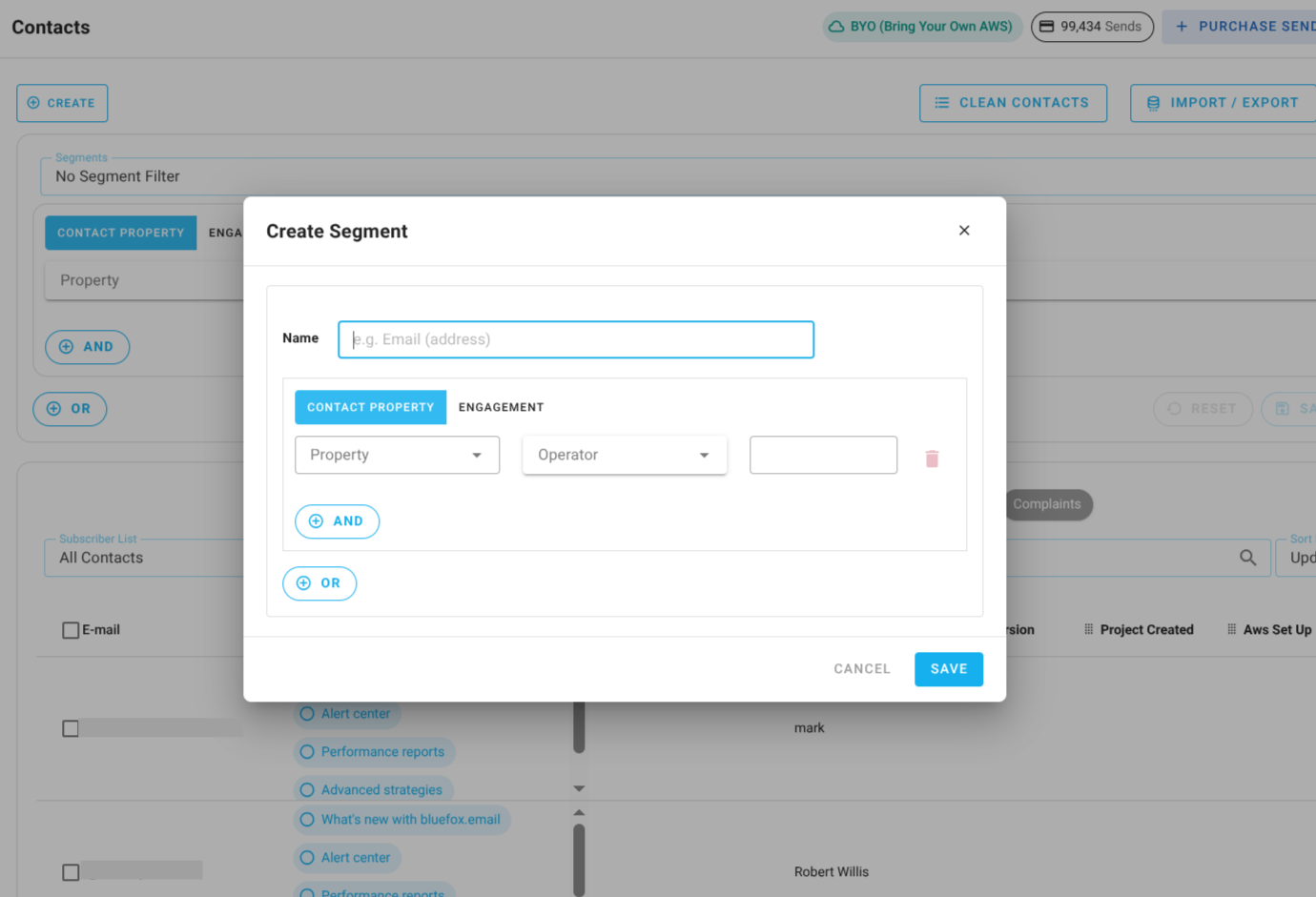
When creating a segment, you'll need to:
- Name: Give your segment a descriptive name (e.g., "Premium Users", "Recent Signups", "Inactive Subscribers")
- Conditions: Define the filtering criteria that contacts must meet to be included in the segment. You can add multiple conditions and group them using AND/OR logic.
Segment Filtering Logic
Segments use a powerful condition-based filtering system that supports both AND and OR logic operations. This allows you to create simple or complex targeting rules to precisely identify the contacts you want to reach.
AND Logic
When conditions are joined with AND logic, contacts must meet all specified conditions to be included in the segment.
Example: Premium users who signed up in the last 30 days
- Condition 1:
hasAPIKeyis true - AND
- Condition 2:
awsSetupis true
OR Logic
When conditions are joined with OR logic, contacts need to meet at least one of the specified conditions to be included in the segment.
Example: Contacts who are either premium users or have made a recent purchase
- Condition 1:
nameequalsBlueFox Email - OR
- Condition 2:
SentACampaignis true
Available Filter Conditions and Operators
Contact Properties
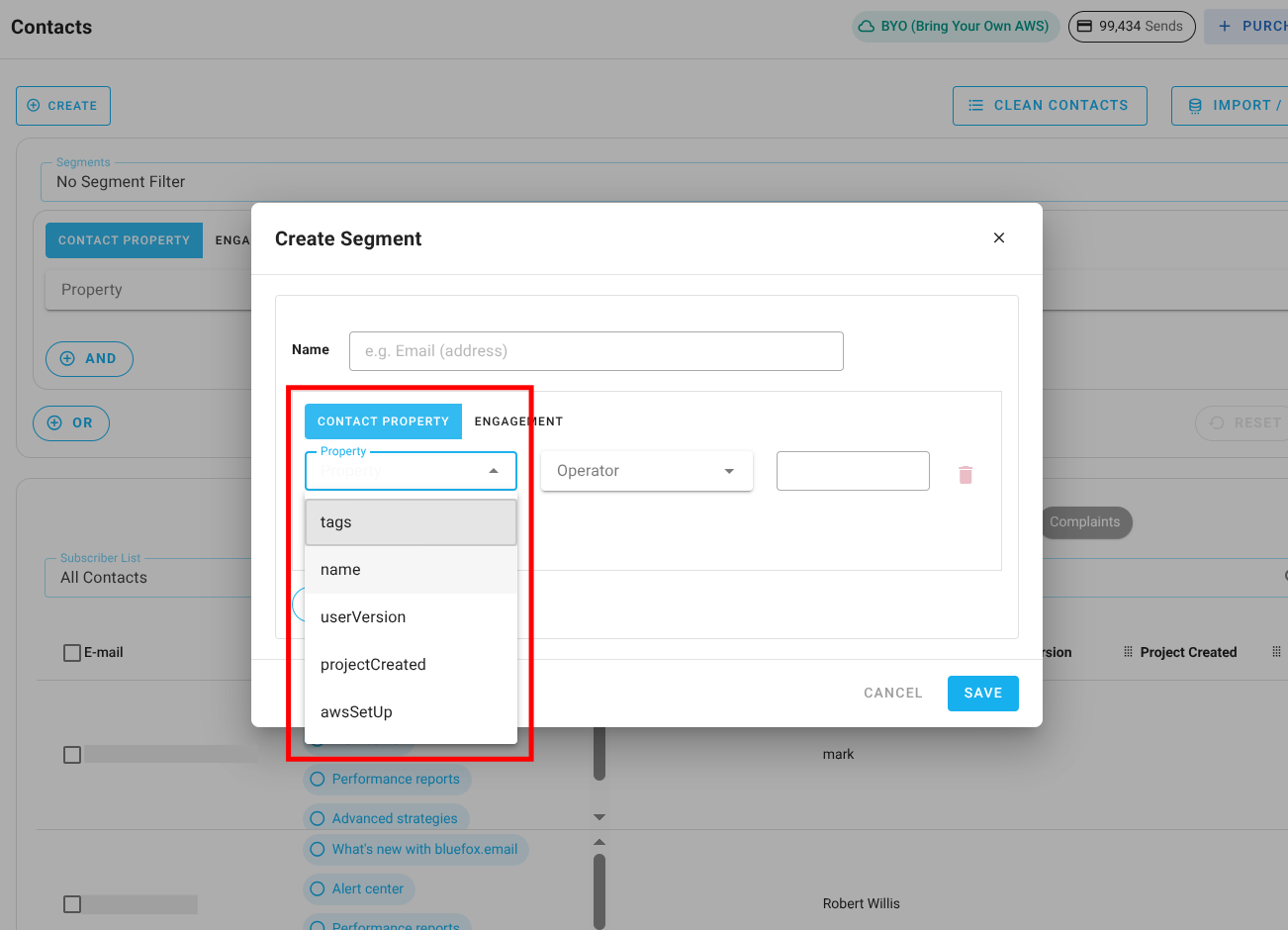
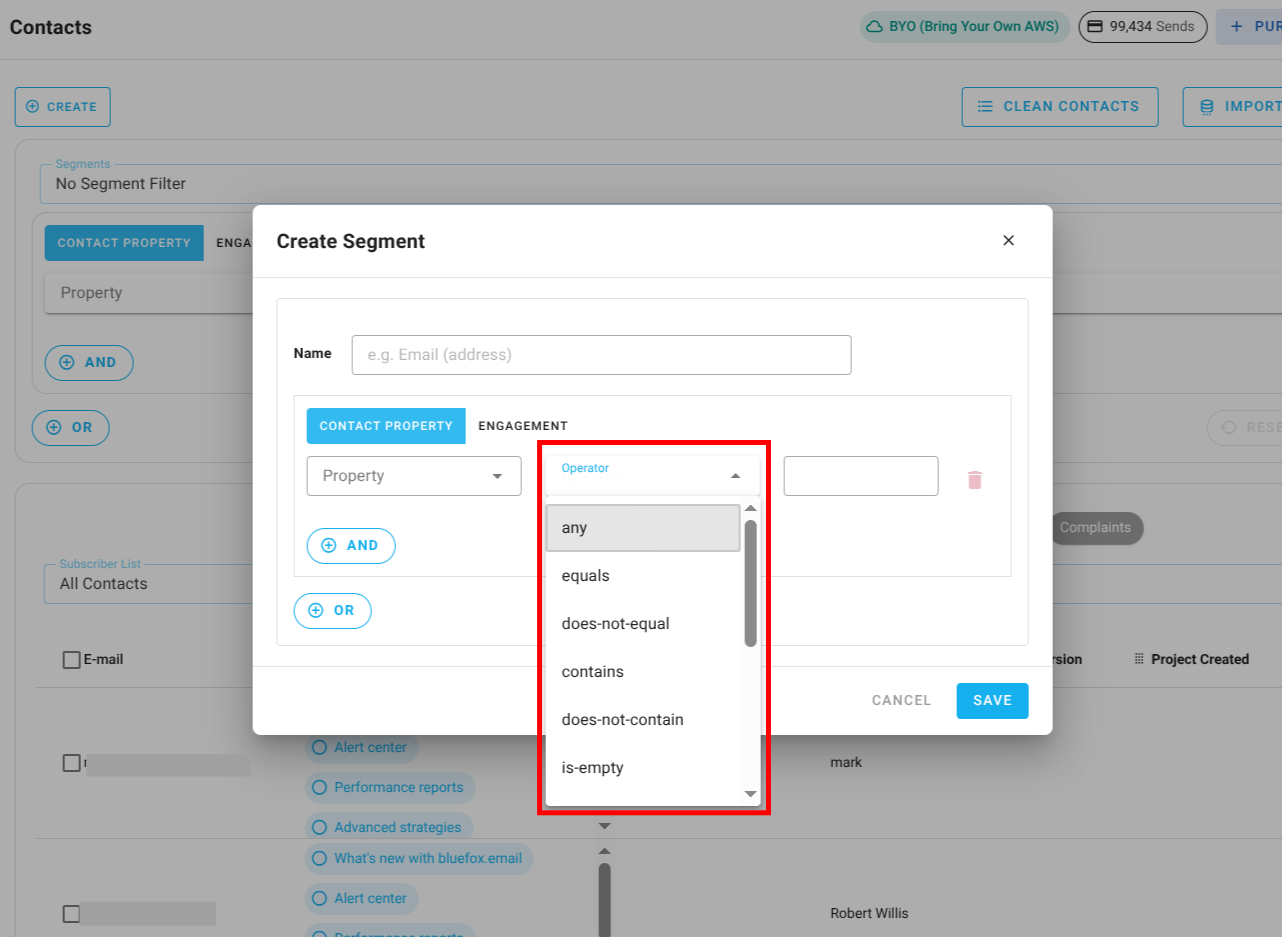
All contact properties and tags will be listed in this drop-down menu, allowing you to choose the property that defines the condition for your segment.
Operators
Segments can filter contacts based on various operators applied to contact properties. Here are the available operator types:
- Equals
- Does Not Equal
- Contains
- Does Not Contain
- Is Empty
- Is Not Empty
- Greater Than
- Less Than
- Greater Than or Equal
- Less Than or Equal
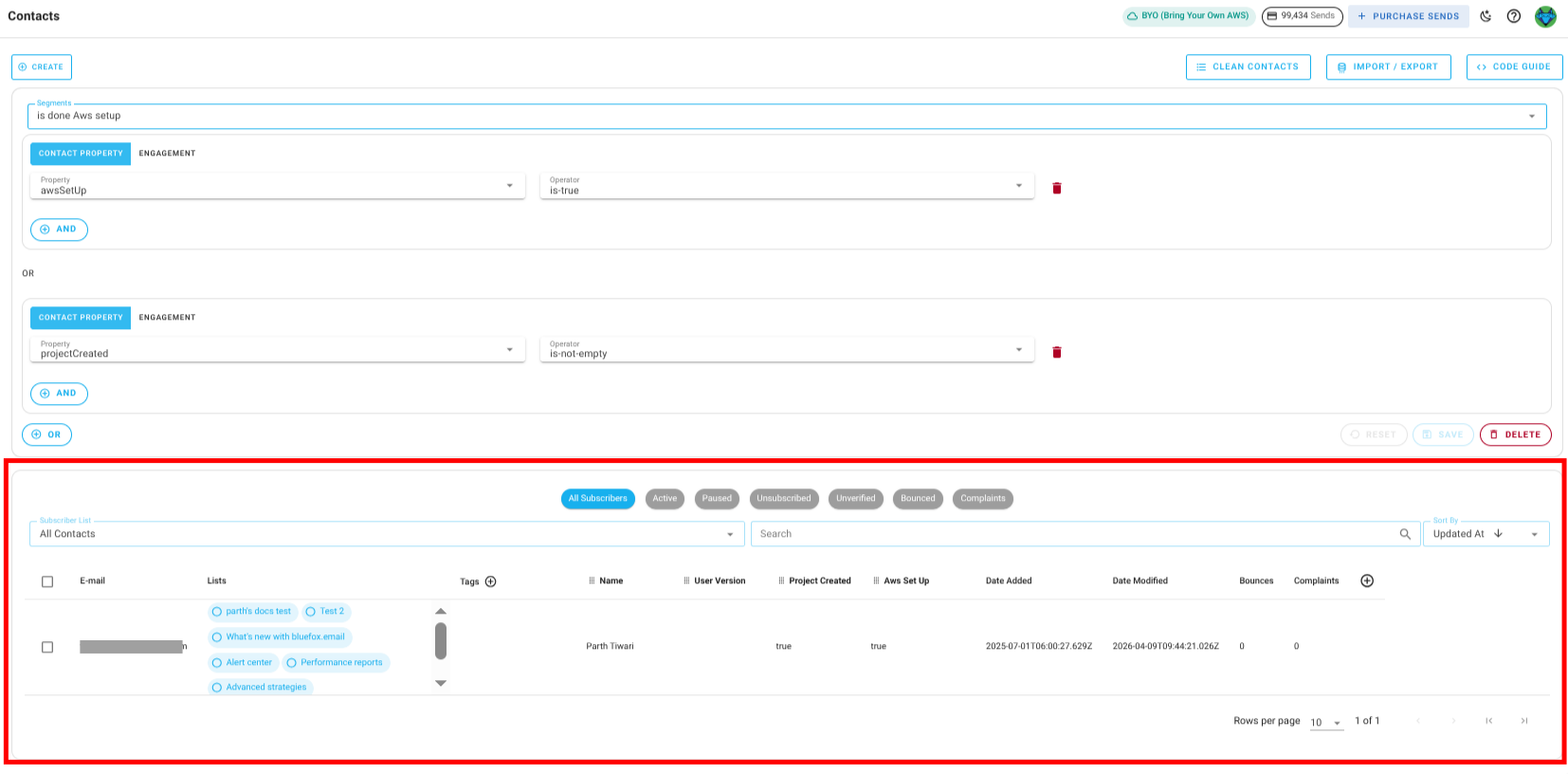
To see your contacts that match the segment conditions, click the Segments tab and then choose your segment by its name.
This will show you how many contacts currently fit the criteria you've set.
Engagment based Segments
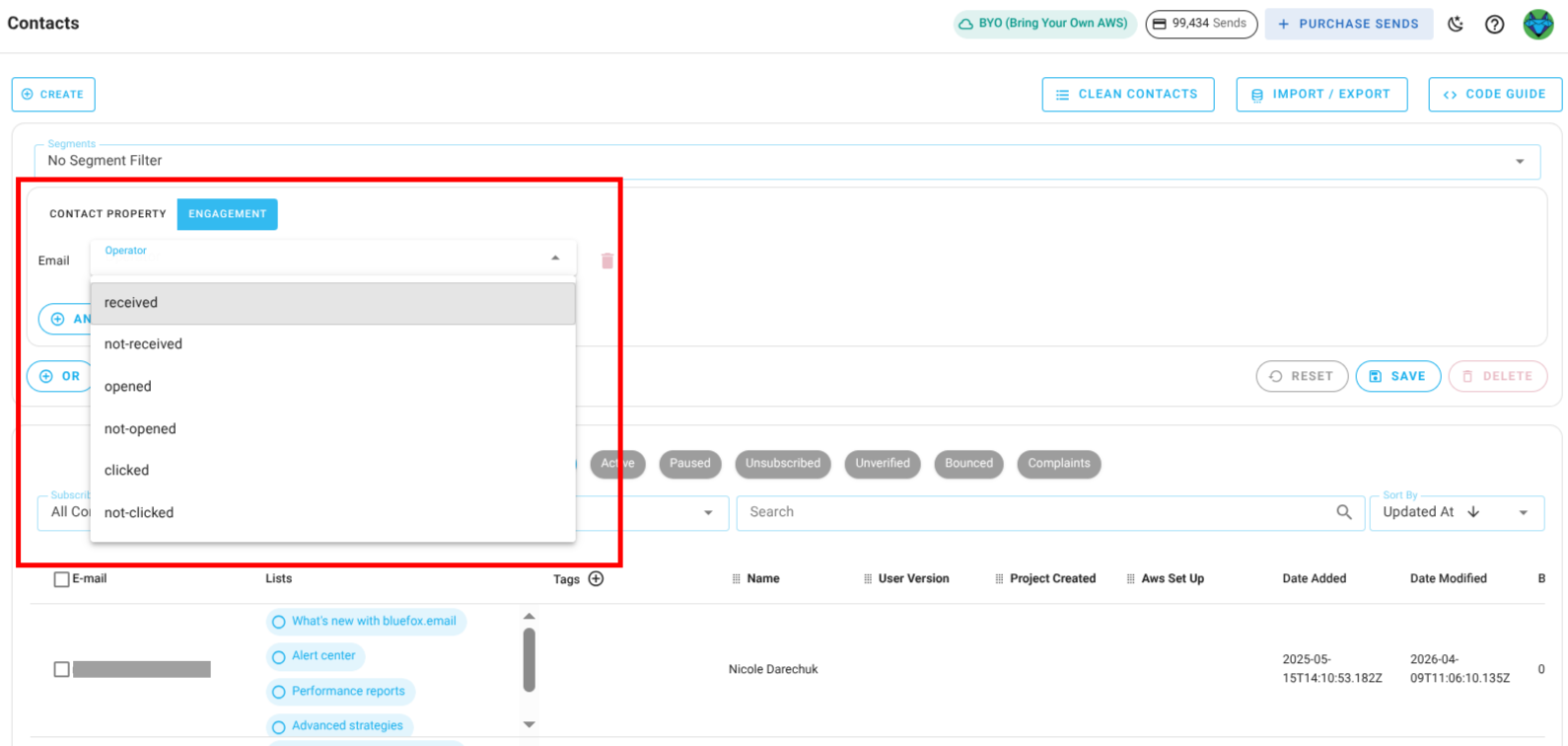
You can also create segments based on contact engagement with your campaigns. This allows you to target contacts who have interacted with your emails in specific ways, such as:
- received
- not received
- opened
- not opened
- clicked
- not clicked
To create an engagement-based segment, click on the engagement tab in the segment creation section.
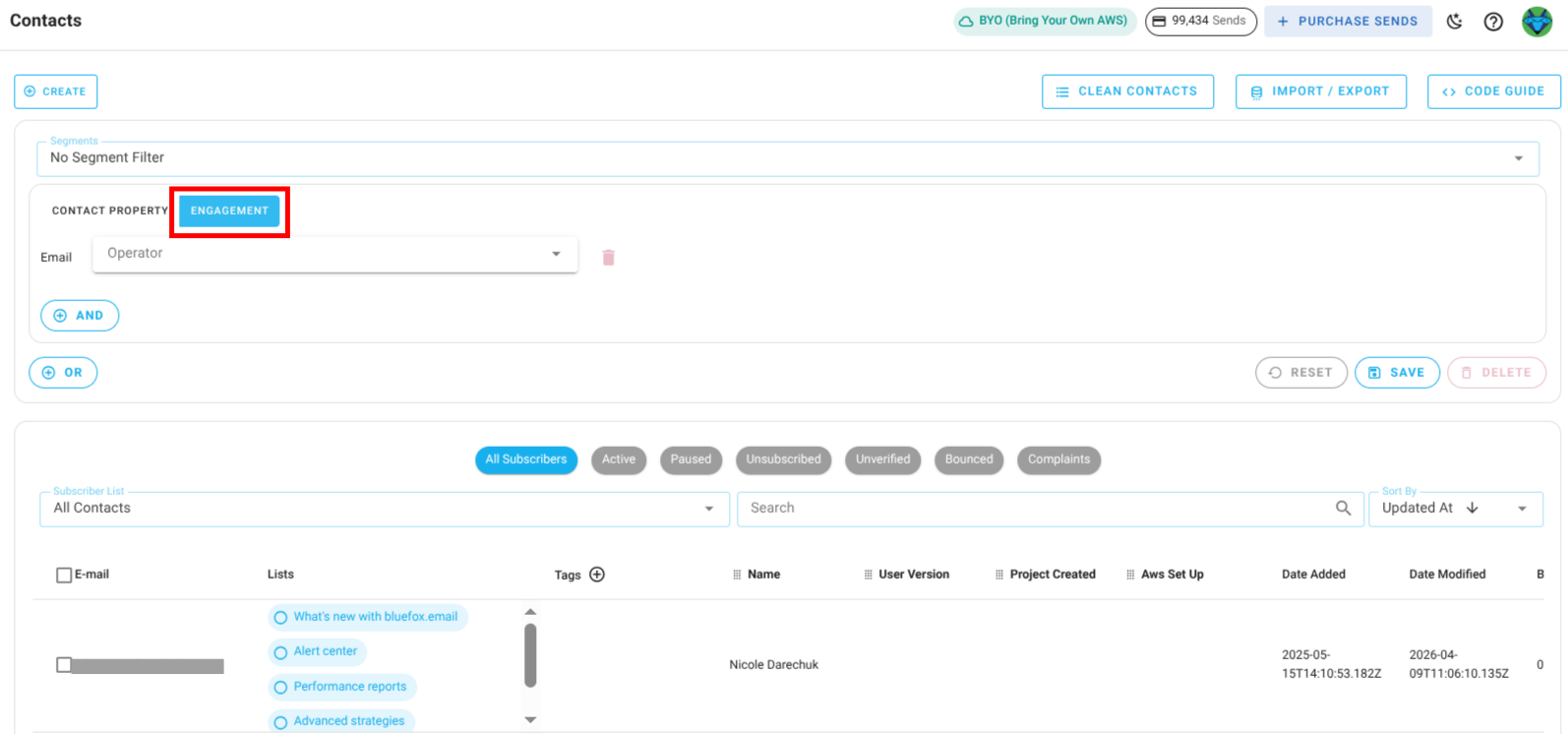
Then, choose the engagement condition you want to apply to your segment.
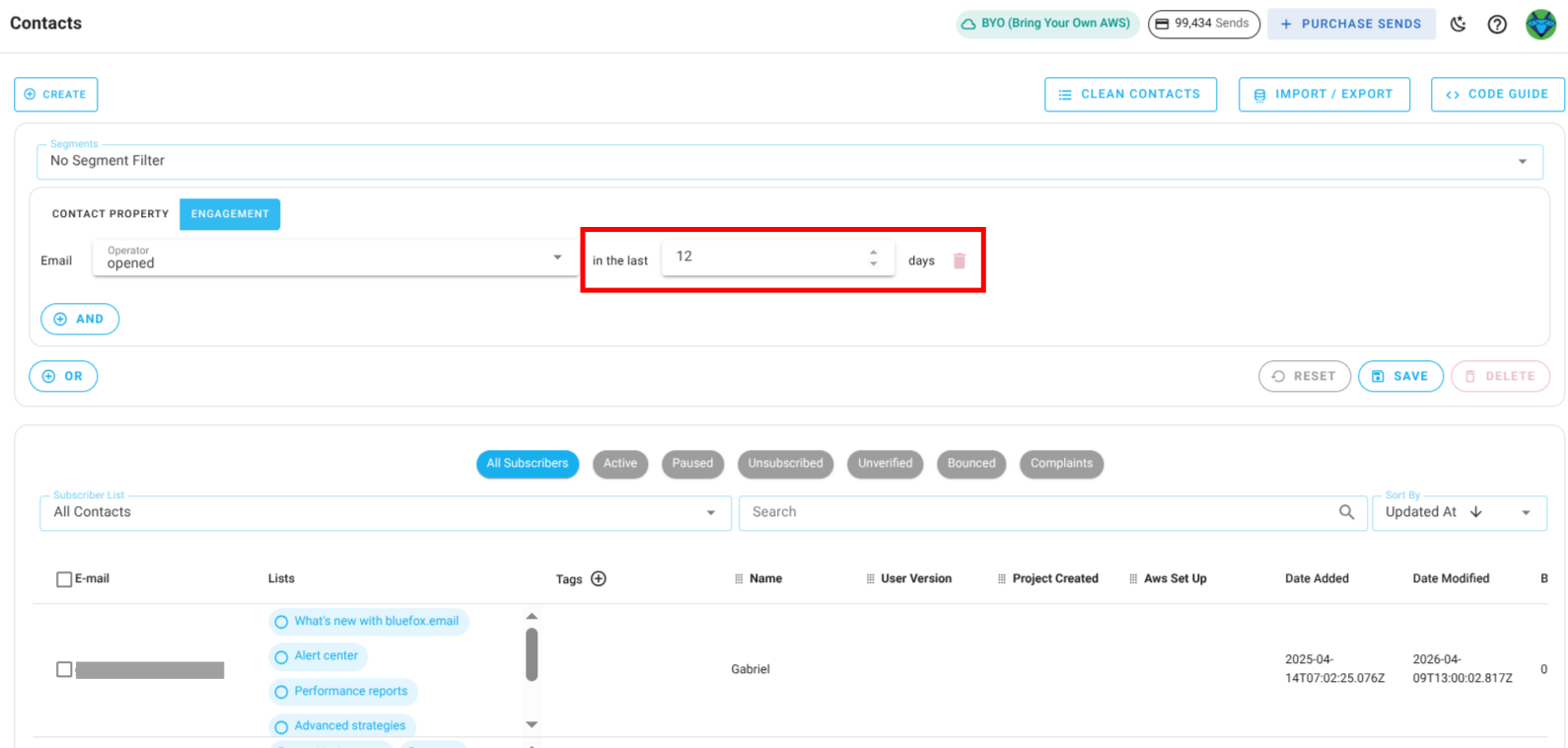
After that you will need to specify the number of days for the engagement condition. For example, if you choose "opened" and set it to 30 days, the segment will include contacts who have opened any of your emails in the last 30 days.
Related setting:
The same condition builder is used by the unengaged segment in your project settings. That definition is project-wide and powers the Exclude unengaged option on campaigns, triggered emails, and automation Notify nodes, so you don't have to build an exclusion segment yourself.
Segment Application Scope
Segments can be applied to different contact scopes depending on your needs:
All Contacts
Apply the segment filter to your entire contact database, regardless of list subscriptions. This is useful for:
- Broad behavioral targeting
- Cross-list segmentation
- General contact characteristics
Specific Subscriber List
Apply the segment only to contacts within a particular subscriber list. This is ideal for:
- List-specific targeting
- Topic-based segmentation
- Maintaining list context while adding precision
Managing Segments
Editing Segments
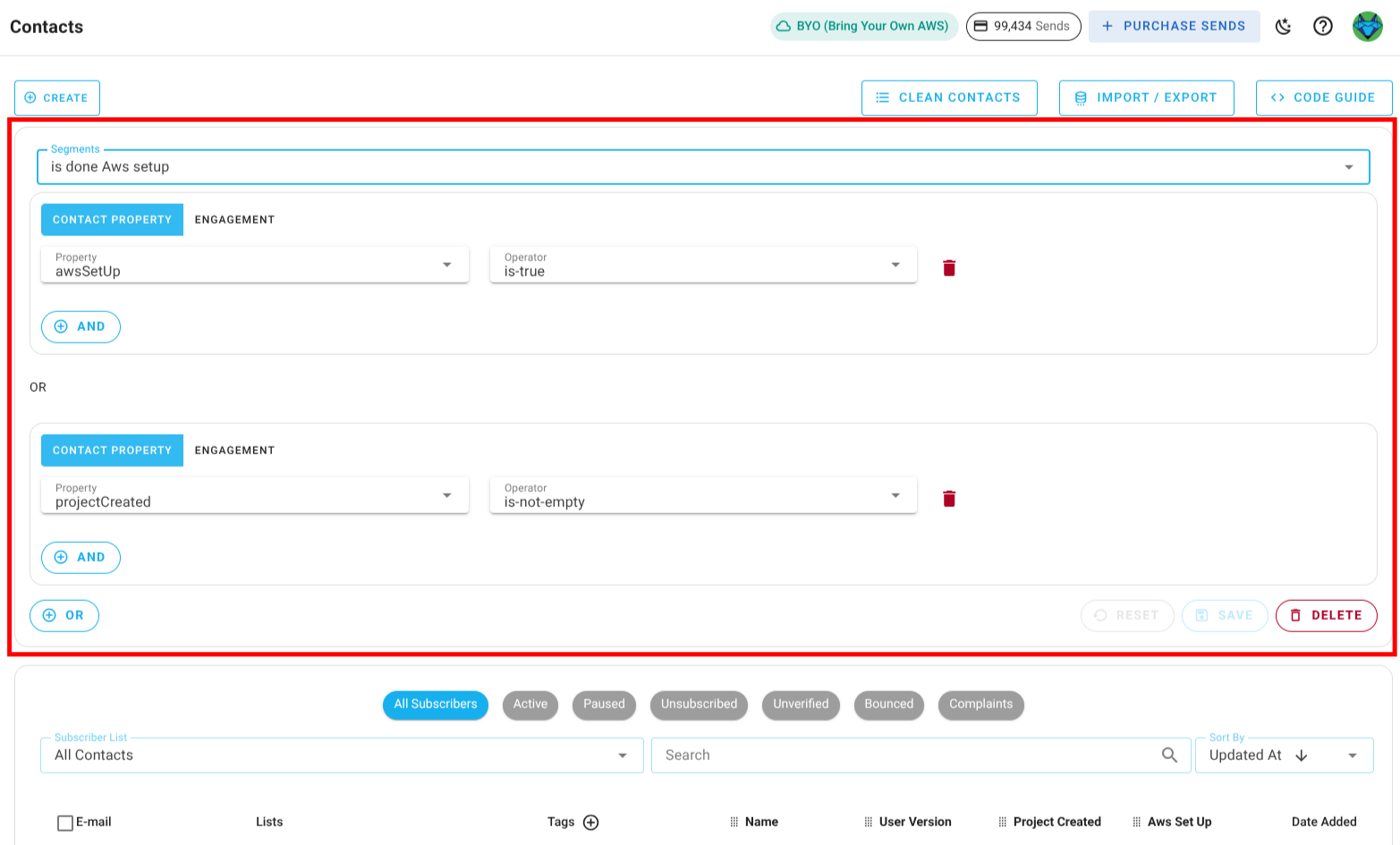
You can modify segment conditions at any time by clicking on the segment name and then editing properties. Changes will automatically update which contacts are included in the segment.
Deleting Segments
To delete a segment, click the trash icon next to the segment name. Confirm the deletion when prompted.
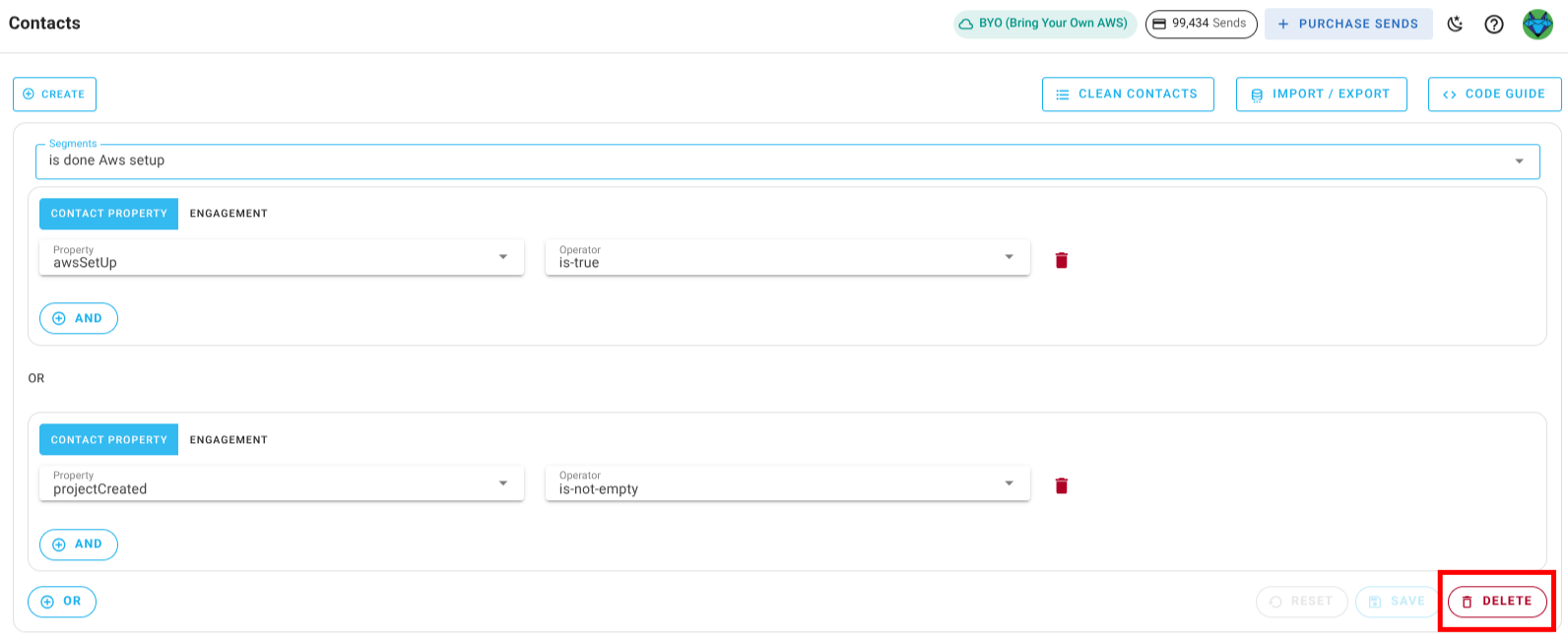
Note: Deleting a segment does not delete the contacts within it; it only removes the segment definition.